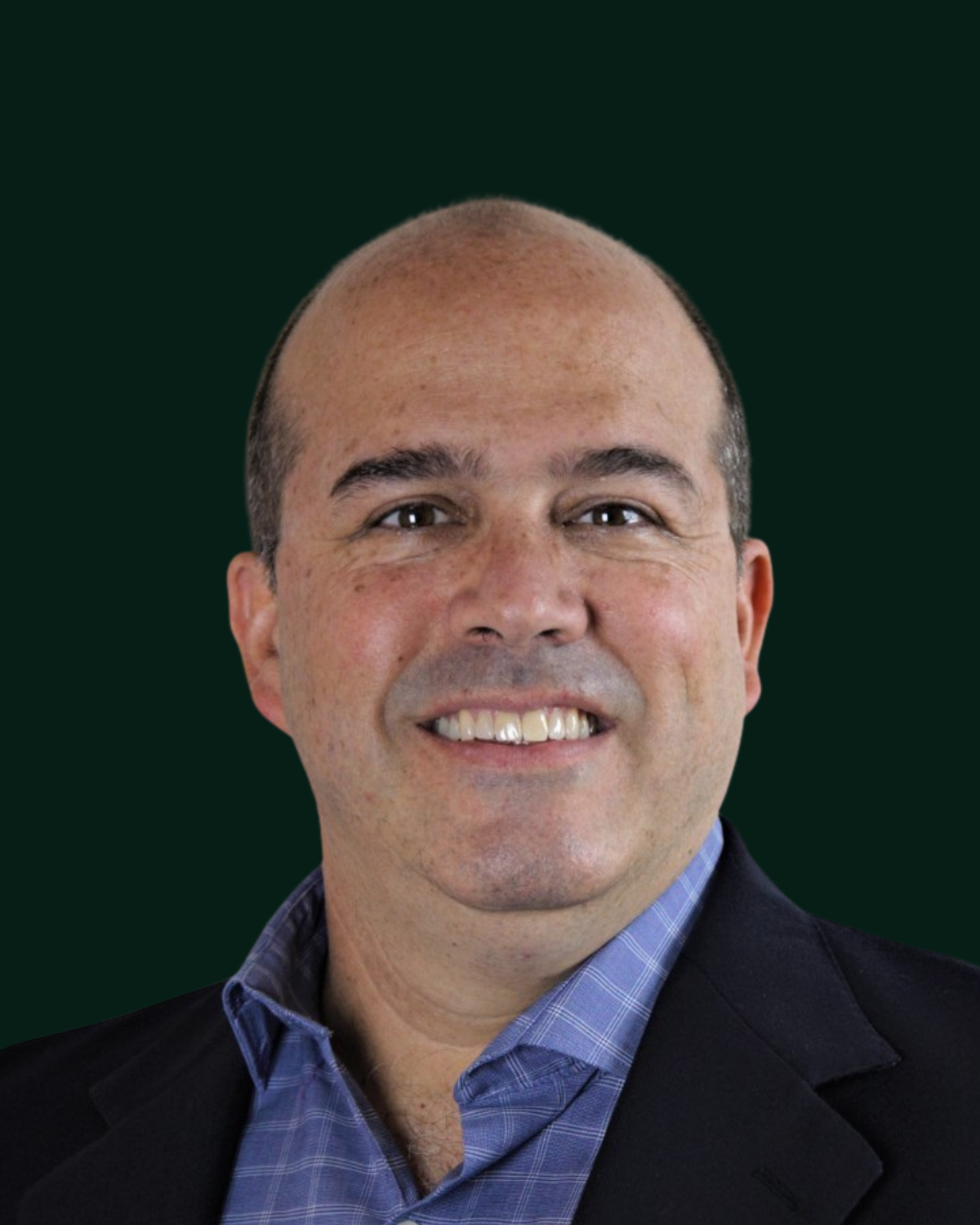
Episode 41: Navigating AI, Generational Marketing, & Strategic Leadership
Hosted by Aaron Burnett with Special Guest Mari Considine
In this episode of The Digital Clinic, we explore the rapidly evolving landscape of healthcare marketing with Mari Considine, Chief Brand & Marketing Officer at Acenda Integrated Health, where she’s spent over a decade transforming how the organization understands and values marketing’s business impact.
Mari shares the concept of “two different internets,” explaining how search behavior on traditional platforms fundamentally differs from AI-driven queries, forcing healthcare marketers to develop entirely different content strategies to reach the same audiences. We discuss the practical realities of cross-generational marketing in behavioral health, why healthcare organizations must adapt not just channels but messaging itself to resonate with different generations’ unique relationships to mental health, and how to prove marketing’s business value by aligning KPIs directly to organizational strategic plans. From navigating compliance challenges to achieving remarkable internal communications adoption, Mari reveals how strategic leadership requires building infrastructure and empowering teams rather than staying in creative execution, and why specialized marketers need to become generalists as platforms evolve rapidly.
This episode delivers actionable insights for proving marketing ROI to executive leadership, adapting to AI’s impact on search behavior, and building marketing functions that drive genuine business growth in an era where traditional planning approaches no longer work.
Listen & Subscribe:




Mari’s Professional Journey in Behavioral Health
Aaron Burnett: You have such a fascinating professional history. Would you mind talking us through your professional history and also the mission that I sense exists in your professional history that led you to where you are today?
Mari Considine: Yeah, absolutely. Throughout my journey, I really started, honestly, I started my first job right out of college. I was a flight attendant, believe it or not. I still talk today, and I’ll probably reference that in the future, about all of that customer care and service training I got back then. I still use almost every day in my work as a healthcare marketer. But my healthcare marketing career really started out in higher ed in the healthcare professions area. And that’s really when I learned about applying my marketing education and my people skills in a way that actually supported getting people into healthcare professions—nursing, medical school, all of that. And it’s evolved since then. Again, largely in healthcare marketing, different behavioral healthcare organizations. I also had an eight-year stint as the CEO for a Meals on Wheels program in Delaware, wanting to do something a little bit different, but knew I would miss that marketing and communications area of focus. And certainly coming back to healthcare marketing where I am now. And so I am with Acenda Integrated Health. We are a large behavioral health, multi-service, multi-location organization. I am responsible for our marketing, our communications, our brand, our internal engagement. And in fact, we just reorganized my teams to be the brand marketing and engagement team, which I think is a more modern take on the work that we do. Also showing how my team is really working, certainly to support the work at the organization, but really to drive business goals. I’m really happy with this new realignment. And as we move into 2026, certainly with all the changes, everything happening, I’m really excited to take this team along that journey. I’ve mostly been working at more complex healthcare organizations, but largely specialty. So I’ve been with an eating disorder clinic. I’ve been in behavioral health. For me, I like to hone in on one area and really explore that. And so at Acenda, I’ve been here 10 plus years. And we’ve really evolved, and we’re excited to see where 2026 takes us.
The End of Long-Term Planning in Marketing
Mari Considine: Five years ago, we could create all of these wonderful year plans. We can’t do that anymore in marketing. We really are in a position now where we plan as best as we can, but we don’t even know what AI’s going to be doing two weeks from now.
Aaron Burnett: Yeah.
Mari Considine: Let alone a year from now. So certainly planning has been different. I’m a change person, so for me, this has been a wonderful thing. But I do think for some healthcare marketers, it is much more challenging because it’s definitely having to do things very differently than we’re used to.
Aaron Burnett: Differently than we used to. And then differently again, and then differently again. Like you, I’m a change person, so I find it pretty exciting. Probably 90% exciting, 10% anxiety-inducing depending on what’s happening. So that’s an interesting jumping-off point. Tell me about how you are leveraging AI today and your vision for how AI can be a part of what you do from a marketing perspective and maybe even a part of what Acenda is delivering operationally.
Using AI in Healthcare Marketing
Mari Considine: Yeah, absolutely. And so we’re using AI in so many different ways. From the very simple things like grammatical errors, spelling mistakes, none of that should happen anymore because we’re in a world where we can write our copy. We certainly, a lot of what we do, we’re in healthcare. We’re using our clinical expertise, so we aren’t using AI to create our copy. But by all means, we are making sure that it checks our grammar, that it checks our spelling. So in the simplest of ways, AI has certainly been helpful for us. But in other ways, we are now honing in on that answering of questions. So I think it’s really made our content much more tailored to the consumer. Where I think in the past, we might be looking at things, we might think we know what the consumer needs. But now that we are so hyper-focused on answering those questions and really delivering to the consumer what they’re asking of AI, it’s really changed and impacted our content, how we’re marketing, how we’re phrasing things, really bringing this more, I think, very consumer-friendly focus to everything that we do. AI has really brought that to us, and it’s been really wonderful.
AI as Support, Not Replacement for Human Care
Mari Considine: In terms of service delivery, we really believe in behavioral health, there is no substitution for that human-to-human therapeutic experience. That doesn’t mean that AI can’t be there as a support. Certainly when somebody calls our call center or has a question, some of these things might just be simple FAQs that we’re able to answer and assist via AI. But nothing’s ever going to take the place of that warm, friendly voice at the other end at our access center or the therapist. Therapists can see nuance, and you can’t see nuance in AI, right? And if somebody is saying they’re great, our therapist can really look and identify things that maybe AI cannot. But again, for those who live maybe in areas where care isn’t as accessible, can AI bridge the gap in between appointments? That’s certainly something worth exploring, but definitely not as a replacement. But in our marketing department, all of our platforms, we are only investing in platforms that are moving forward, certainly within AI focus. And we’ve actually dropped some of our MarTech platforms that really haven’t caught up as fast as they should, because they all should be integrating AI to help us do our jobs better. And so many of them are. The ones that aren’t, we’re looking for new products. We really care deeply about our MarTech stack because we are investing in it, and we want to make sure that it’s as modern as possible. But it’s also a platform that’s evolving because what it is today needs to be something different, maybe six months down the road or next year. And I know that’s challenging for them and certainly for us. But signing a three-year contract with any platform, things like that just aren’t happening anymore because we’re wanting to use AI to certainly help us in our work, be more efficient, and help us to grow and certainly drive revenue for the organization. From the most simplest of ways through spelling and grammar, all the way up to how do we identify keywords and questions that people are asking, and how do we use our Salesforce platform and other things in a more efficient way.
Aaron Burnett: Yeah, we take a similar approach because our focus is healthcare and med tech. We stop short of producing any content. We can get all sorts of insights and use AI as a good strategic foil for research and development behind the scenes. So it sounds like you’re doing some form of AI monitoring that gives you signal with regard to the questions that consumers are asking. How does that differ from, and what are you learning from AI that you maybe didn’t learn from monitoring typical search queries in an organic search or a paid search context?
The Difference Between Google and ChatGPT Searches
Mari Considine: It’s completely different. It’s almost like I saw somebody refer to this, and I think it’s so dead-on. We’re working with two different internets now. And so what people are searching for when they go on Google is completely different from what they’re searching when they’re putting a query into AI, ChatGPT. And so it is, it’s almost two different consumers, two completely different queries. And so I think just like all of us when we’re going into chat, we’re having more of a conversation with the product and trying to get information that way. And Google, when I go on Google, I still use Google the old way, right? And it is very different. It’s very personal. It’s a little bit more focused in chat where Google, not so much. And so we still are using those insights that we get through Google, still seeing there because there’s still an awful lot of people, generationally, right? We’re looking at boomers. I’m Gen X. Most of us are still doing search through Google, even though I think that’s changing rapidly. We still need to make sure we’re there. But the searches in ChatGPT are much more personal, much more custom, much more specific. Where somebody might search “anxiety” on Google, they’re searching, “How do I know if I have an anxiety disorder? How do I know if my child has an anxiety disorder?” So it’s much more nuanced in chat than it is in Google, where again, they’re not going to put all that information in. They’re going to search in a much vaguer way. But it’s interesting, and I heard somebody say it’s two internets, and you have to deliver to both. And yeah, that’s where we are.
Aaron Burnett: I feel like the intent is so much clearer in AI-driven searches.
Mari Considine: Oh, completely.
Aaron Burnett: Yeah.
Mari Considine: And that’s helped us with our content. And that helps us get seen and more visible on Google too. So if we’re, instead of creating content specifically about anxiety, things that are much more generalized, we may be creating a piece of content like “How do I know if my adolescent is suffering from an anxiety disorder?” That helps us get seen through that more niche content on Google, but it’s really AI that’s driven us to write that because we’re really trying to deliver to that algorithm as well. It helps with both, but it’s certainly interesting to see how different it is.
Aaron Burnett: How are you approaching AI monitoring? This is like many aspects related to AI. There are lots and lots of vendors in this space, lots of vendors making grand promises. A really significant percentage of them don’t deliver at all on those promises. And there are a few who deliver really substantive results. How have you found success in AI monitoring? And if I’ll be super direct, what do you use?
AI Monitoring Tools: Current Limitations
Mari Considine: We are on our second product, and I’d say it’s not exactly what we’re looking for. So I’m not going to use any names.
Aaron Burnett: That’s fine.
Mari Considine: But I think you’re right. I think that there are so many promises, and this is an area where I just think many of them don’t even know. So it’s like, how do you deliver? I think it’s better than nothing. I think it’s better than us going in, but I still do it. I go in and see how we pop up in chat. I’ll prompt it a little bit just to see, and sometimes we do and sometimes we don’t. And again, I’ll even put the organization in just to see what chat comes up with and say, “Hey, look where they’re pulling from.” And sometimes they’re pulling from a lot of really old information that we need to update on some ancillary old website that we were on. I’m like, “Get that fixed.” But yeah, I would agree that we’re still in the infancy of finding the most powerful product. But I’d love to hear if there are ones that are delivering really well. I think we haven’t yet seen through the products that we’ve been using true success and the metrics that have been promised. And so I think we’re better than not having it, but I certainly think that there’s definitely room to get this right. And again, we’re not signing any long-term contracts because things keep changing, and we want to make sure that we’re able to pivot and be nimble enough to move on to a new product so we’re not losing ground because we’re using the wrong technology.
Aaron Burnett: Your focus and part of your expertise is around building data-informed strategies for marketing. You’ve been with Acenda for 10 years. You’ve been there during a very interesting period of time, a period of time when you had relative freedom compared to now and then got to live through and work through the OCR guidance from HHS at the end of 2022. How did that guidance impact your marketing? And what was Acenda’s stance from a compliance perspective, and how have you needed to change what you do? How have you remained successful with those changes?
Navigating OCR Guidance and HIPAA Compliance
Mari Considine: We’re not as reliant as we were on some of our Google advertising, some of the things that we had traditionally done just because we’re still making sure that we always are above and beyond the regulations. I think that’s really what gets lost in this. With that said, of course, now there are new platforms that are really allowing us to continue to do that type of marketing, taking out any of the HIPAA issues, any of the PHI. I think it really has been a challenge, probably not as much for me as my team, to be honest with you. They’re the ones that are working in the day-to-day. But I will say, from my more executive mindset, it’s really been having to change where we spend our money to make sure that we’re staying visible, that patients are able to get our services. Also making sure that we are not falling into any compliance issues, any violations or anything like that. We are erring on the line of pulling back some marketing rather than taking any risks. We want to make sure we get people in care, but we’re not going to do it in a risky way. I just was with a privacy platform. They’d hosted some healthcare marketers. It was a really great couple of days to really talk about basically how we can compete with the retail sector and do all of those things with having the kind of regulations that we have. People have been pulling back, less ad spending on some of those online ads and doing things a little bit different, and it has had an impact, I think, for everybody. I think we’re in a new phase of how we do things. Some healthcare organizations that aren’t responsible did need those firmer regulations. I would say with some irresponsibility comes more regulation.
Aaron Burnett: Yeah. Yeah. I’m inclined to agree with you that in the main, healthcare marketers were generally very conscientious. It tended to be the platforms, in particular Meta. I think there were a lot of people who were surprised at what Meta was quietly slurping up, and a lot of people who were surprised at the architecture and the way that third-party tracking is operationalized and that the data collected is not within the control of the website itself. It’s the platform.
Mari Considine: I agree with you. I think it’s definitely been a wake-up call just by the very nature of some of the advertising we were doing that was very intentional. We were in fact providing information that we shouldn’t have, but that was not knowing. And I do think, yes, obviously they’re very irresponsible. I think with all things, it’s now a numbers game because there are those privacy platforms now that de-identify anything. So you’re still able to do a lot of that marketing. That comes at a cost. And so it’s balancing what that looks like for us. We’re cross-generational. We can’t say we’re not going to be on a Facebook, or we’re not going to be on a particular platform because of those challenges. Now do we do that kind of advertising? No, things are definitely a little bit different, and we’ve definitely pulled back from some of our online ads. We don’t want to miss a whole segment of our population because we’re only advertising on certain areas and only visible in one place. Yes, we have the two internets now, but social media is pretty powerful. You look at Facebook and there are a lot of boomers on there. People think that they’re only doing traditional Google, and they’re not. They’re all over those platforms. But really, even looking on the other side of it, you look at Gen Zers who are now working professionals, many of them, who are looking for healthcare services. They are not searching on any of those traditional platforms. And so if you’re not showing up on, ugh, cringe to say, like a TikTok…
Cross-Generational Marketing: TikTok to AARP
Aaron Burnett: I knew that was what you were going to say.
Mari Considine: You’re really missing because the numbers don’t lie. They are not searching on Facebook. They are looking at recommendations from friends, from influencers, from what pops up in their feed on TikTok. You can’t ignore it. I think for so many years, older marketers were like, “No, we don’t need to be there. We really need to stay true to the platforms that work for us.” If you have a Gen Zer who’s just out in the workforce, who’s maybe sad, lonely, suffering from anxiety, who’s looking for a therapist, they’re not going to find us if we’re not where they are. I think it’s interesting. I’ve definitely done some work in research around the generations and how they are consuming healthcare marketing. Their trust is in who they see on TikTok. My parents’ trust is in a physician, somebody who has the most training you could possibly get. And they’re reading maybe an AARP magazine, and they’re influenced by what’s published there. How do you get your message to both audiences? And I think we segment very often in many different ways, but I think if we look at things from a generational lens, I think it really helps us to focus. Doesn’t mean we have to change our marketing and our messaging. It just means that we have to change where we are, how we show up.
Aaron Burnett: I interviewed the senior director of content strategy for Fred Hutch a couple of weeks ago. He was remarking on the way that they had needed to change their content strategy so that they are telling complete stories in channel. Historically, the thought was, “I’m going to publish something that’s a snippet or a promotion. I’m going to try to draw people back to the larger body of content, the delivery on the overall story in a blog post or a video on my website.” And he said that what they see, and we see this as well, is people just stay in the channel. If they’re on YouTube, they’re going to stay on YouTube. If they’re on TikTok, they’re going to stay on TikTok. So you have to be prepared to deliver all of your message there, whether in one body or iteratively, which I think is a very interesting adjustment.
Delivering Content In-Channel
Mari Considine: It’s such a different mindset, but if you’re not thinking about those things, you’re doing things the old way. But you’re changing your messaging in a way that maybe sounds young, and that’s just not the approach. And I think there are ways to make it easy so you’re not doing tons of different marketing with tons of different messaging. Those nuances are important and understanding that people aren’t going to leave that platform for the information you’re hoping they get. It’s important. And if you want people to get the information, it’s got to be there, and you have to be there as an organization.
Aaron Burnett: Yeah, that’s absolutely right. What has been different about operating at a CMO level versus some of the other still-leadership roles, but more operational roles? How did you need to shift your thinking?
Transitioning from Operational to Strategic Leadership
Mari Considine: Oh my gosh. And that’s been a challenge, and it’s funny because I was just talking to my direct report, who’s also in this bridge between a director. Now she’s moved into a more executive management position, and that’s a tough bridge to cross. Some of it is tough because of your own personal thing. So I love the creative piece. I love having, touching and being a part of that. And you can’t do that as the CMO. You have to allow things to be out in the wild and to see them for the first time. The moment I saw something out in the wild that I’d never seen, I knew, “Okay, I’m getting there.” I think it is switching that mindset and putting in the strategy and the vision that gets you to see the thing out in the wild that is just maybe how you would’ve done it. It might be a little different. You’ve given people the tools. You’ve put in the strategy. You’ve set the vision. And so when people have the autonomy to create, they’re still creating to what you’ve actually created on the strategic side. That’s hard because, again, I am someone who likes to be in Adobe. I like to create. I like to be a part of that, but I can’t do that. And I can’t be the one that’s approving things. I can’t be the one that’s… I love when my opinion is asked, but that’s not my job. My job is really to be the one that’s making sure that we are a business driver for the organization and not simply a cost center, not simply order takers on the marketing side. And a lot of the work that I’ve been doing, particularly the past couple of years, has really been speaking the language of finance, speaking the language of operations, really ingraining what we’re doing in more of the business sections of the organization rather than the support areas. For us, we know we drive revenue. We know we drive growth. But I think the big realization was realizing that the others didn’t know that. My path the past couple of years is being able to show the connection, certainly through data. “Here’s what we brought in. Here’s what we’re able to do.” But it has to go farther than that. It has to be about that relationship building. It has to be about changing your positioning within the organization.
Restructuring to Brand Marketing and Engagement
Mari Considine: We were the traditional marketing and communications team. And they’re two actually separate, distinct teams. And seeing the importance of brand not being in there and the challenges that we had in looking like we are overstepping when we’re trying to infuse brand into our facilities, into how people are greeted, into how the phones are answered and realizing that we are marketing and communications, and we’re being seen as overstepping even though we own the brand. People aren’t seeing that. And so this new structure allows us to certainly get out there a little bit more. So we are brand marketing and engagement, and really that is… it’s still marketing and communications, but I think it’s a lot more intentional in who we are, what we do, and what our priorities are. And then we’ve taken over reputation management, which has been something that has really been in our compliance area. And so when I say “took it over,” we took it over from a marketing lens just a few months ago. But we’re partnering with compliance, and we’re working with them. We’re making different investments, so we’re able to boost those things so people again can find us and have trust in what they see when they look at us. We realized we didn’t have a lot of reviews, and the reviews that we had, let’s be honest, if you don’t have a lot of reviews, the reviews you have probably aren’t very good. And so we just weren’t very intentional in getting people to put those reviews out there. And again, not just with reviews, but through other things that we’re doing, really investing in reputation management. Without having kind of a CMO or an executive at the helm, these are things that get forgotten in smaller organizations and organizations that don’t have that structure. Our realignment, we are focused on engagement, so our communications team isn’t just doing external and corporate comms. They’re also doing internal comms. We have an internal employee app that’s on everybody’s phone, also desktop. But again, we have a 93% intranet usage rate at Acenda, which is so far beyond benchmark of any other healthcare organization that even the platform we’re on worked with us to do a case study and a white paper because they wanted to know what we are doing and what our secret sauce was to get so many people using the intranet. And at an organization we are anywhere from 700 to a thousand employees, having 93% of all of our staff on our intranet, it’s pretty exciting. And so again, that comes through setting that vision and then also giving people the tools to do what they’re doing. And I think making that shift and looking at myself as more of the person who is developing the infrastructure, putting those tools into place, and just letting people do and finding outlets elsewhere. So I teach. So now I also teach at the graduate level. I teach marketing. And I’m able to do some writing. I’m able to do a little bit more of those other things that are out of my day-to-day. But mentoring someone who is my direct report, who’s also finding those same challenges where she’s involved in something that’s way too in the weeds, and it’s “How do you pull back? How do you change that mindset?” And I think it takes time, and I think it also takes finding that passion for the strategy and for the vision and for setting those things in place and then the excitement when you see people actually use and succeed in what you’ve built. It’s been a long road, and I’m still not there yet. There’s still every once in a while I’m asking a question I shouldn’t be asking. But I think for the most part, I’ve seen success in what I’ve been able to set up and put into place and watching the team under me grow and lead has been pretty exciting.
Aaron Burnett: You mentioned that you use data to demonstrate that marketing is delivering business value. Lots of people talk about that in healthcare. It’s rare to find someone who actually has been able to operationalize that and demonstrate true business value. How have you done it?
Proving Marketing ROI Through KPI Alignment
Mari Considine: Okay, so we took our strategic plan. We have developed all of our KPIs to align with our strategic plan. So there is no ambiguity in how we drive business value. And so for some of those, it’s like, “How do you show that?” It’s really problem-solving it, but we’ve been able to do it. And so that was a challenge, is literally taking the actual organizational plan and instead of doing what we’ve done in the past, which is somewhat operating in a vacuum, looking at our own metrics, our own KPIs, all of those traditional things that everybody else is tracking, and we still do. And a lot of those are in these KPIs, but we’ve created things like indexes where we’re combining different KPIs to really help show how we’re showing up as a brand. So we have this brand performance index that we’ve created, a lot of individual things, but it aligns directly with the strategic plan, the same language of the strategic plan. And so when I go into a meeting, I show our organizational plan. I show our KPIs, and I’m able to show our success. And it really is as simple as that. It did take a lot of work. It sounds very simple, and it sounds very…
Aaron Burnett: It’s simple.
Mari Considine: Yeah. Yeah. But it did take a lot of work because obviously the organizational plan of a healthcare organization doesn’t necessarily fit into marketing. We’ve been able to create some custom metrics, rolling up some of our more traditional metrics into things that are really valued by the organization. We’re able to show growth. We’re able to show success that way. That literally is the way we’ve been able to show impact and show ourselves as not a cost center, but really a revenue and business driver, which is always the challenge, I think, for marketing and even more so for comms. Particularly internal comms. “How are we moving recruitment, retention, all of those things through communications?” And so that was really actually probably the more challenging piece. But yeah, it’s aligned everything to the strategic plan. So there is not an area of the strategic plan where we don’t have a KPI or a meaningful metric to show that we’re driving growth.
Aaron Burnett: That’s very impressive.
Workforce Development: Specialist vs. Generalist
Mari Considine: I think one of the biggest challenges I think we have as marketers is really in our workforce development. I think we have challenges with different generations, what different people bring to the table, and really balancing that specialist versus generalist, I think, in marketing. And that’s something I’m always trying to problem-solve because we get people that come in and they’re like, “I’m a social media person.” I don’t want them to look at it that way because platforms are changing so rapidly. I’m like, “Yo, you don’t want to be a social media person. You want to be a digital person, or you want to be…” Trying to create those positions within my team where people who are more specialized get that more generalized experience, I think, is important. But we’re hiring for a position, and I do, when I think about workforce development and marketing and making sure people have the mentors and the training that they need to succeed, because I do look at some of the resumes and they are so specialized that it’s tough to move into other areas. And just for example, we’re hiring for a brand position, and so we have a lot of people with really robust digital experience trying to move into brand experience, but they don’t have that experience. And this is a director level. And so working with marketers and helping to mentor and get people to understand that even outside of your area, there’s certainly so many opportunities to grow, whether it’s consulting or training or all these other things. So when you are completing those resumes, you’re able to get that other position. And I do think so many marketers are being forced into these very specialized roles, and where I think that works for some, I think it’s also hard to break out of that. And certainly with technology, you want to do a little bit of a land grab. You don’t want to be obsolete. You don’t want to just do one thing. So in your role, really looking to say, “What else can I put into this role without taking on additional work?” But because if what you’re working on goes away, you want to be able to continue and be viable. It’s been an interesting thing. I do think we look at workforce development, and I think we think, “Oh, we’re going to have plenty of marketers to choose from,” and we do. But do we have the right marketers to choose from? Do they have experience with analytics? We get a couple of our entry-level marketers, never took a stats class, never took any type of business analytics course. And you wonder how a marketing degree or how you get there without that. And so just looking at how things have changed, but maybe academia hasn’t. I also teach, looking at what students are going out into the real world with and making sure again that once they’re in that world, they’re thinking about their future and thinking about how much marketing has changed. I myself used to spend a lot of money advertising in the phone book.
Aaron Burnett: Sure.
Mari Considine: If I had just done that, that is my job, and that was my role, I would not have a job anymore. And looking at how things changed and being eyes wide open. But yeah, I laugh now, but I think, “Oh my gosh, all those dollars we used to spend in the phone book.”
Aaron Burnett: I can’t remember the last time I saw a phone book.
Mari Considine: No, it’s funny because not that long ago, my husband and I were saying, “Remember they used to leave the phone book by our mailbox, and we’d have to go down there and they just leave it there?” And I think it’s probably been 10 years, 15 years. It’s been a long time. If you think about it, that was such a big driver of business, the phone book back in the day, and I was there when it was. Thinking about how marketing evolves and making sure that you’re setting younger, newer-level career staff into the area where they can succeed.
Aaron Burnett: I agree. It’s a challenge for us as well, particularly with AI. AI has had such a profound impact on the kinds of skills that we need, certainly now, and I think over the next two or three years, certainly the next five, that will become even more true. At this point, we certainly look for skills, but as you suggested, we look for broad skills. Mostly we look for strategic acumen, discernment, and a nimbleness of thought, an ability to think across unrelated systems. “If I took this combined with that in this novel way that maybe no one’s done before, it would achieve the strategic aim, and I have the aptitude to go figure that out even though I’ve not seen it done before.”
Mari Considine: I love “nimbleness of thought” because that is, I mean, that in a nutshell is what we need and what they need to succeed because we don’t know what’s coming up. Years ago we thought the phone book was this great advertising area. We didn’t know that two years later it would go away and there’d be this internet and all of these other things. And so those who couldn’t wrap their head around it probably moved into different careers where others who could see the promise and really be excited about what’s next and be able to adapt quickly to it are still around. And I agree with you, and it’s funny because so much of that you can really see in somebody’s resume, and you can see in the conversations that you have. We’ve had interviews where it’s clear they prepped way too much for the interview, so then they bombed the interview, and they might have had the skills, but they were so focused on what they prepped for, and we didn’t ask those questions because we’re assuming you know how to do all this other stuff on your resume. So I’m not asking you about your resume. I’m asking, we’re going deeper. As we get older and as we’re evolving as marketers, not forgetting about that we were those new marketers once and really making sure that we’re making the investments in workforce. And even though I am the CMO, I still try to connect frequently with all staff at all levels in my department and my team, just to do a check-in, see what they’re doing. I like doing it because I get to learn a lot of insightful things, but so they know that they can come to me and that we have that connection. It’s a responsibility that I have. And I definitely like that piece of my job as well.
Aaron Burnett: Yeah. Yeah. I’ve so enjoyed talking with you.
Mari Considine: Yes. This has been wonderful. Thank you so much for having me. I appreciate it.
Aaron Burnett: Yeah.
Sponsored by Wheelhouse DMG