CAPABILITIES
Digital Strategy Services: The Organic Engine Behind Healthcare Brands’ Search Presence and Authority
We help medical device and healthcare brands earn visibility and convert it into exceptional business outcomes. Through SEO, optimization for AI (sometimes called AEO or GEO), content strategy, conversion rate optimization, and more, we guide potential customers, patients, and providers to your site and through their journey from first search to meaningful action. As buyers turn to more sources than ever to research decisions, we make sure our clients are visible and well-represented across all of them.
Agency EXPERTISE
Content Strategy
Our content strategy services are built on a search-first approach, incorporating AI and search engine optimization for healthcare organizations and medical device SEO to enhance visibility and reach. By identifying and filling content gaps within your vertical, we ensure that patients, providers, and decision-makers find the information they need. Using proprietary tools like Lighthouse, we analyze healthcare-specific SERPs and AI responses at scale, uncovering high-value keywords and topics that resonate with your target audience, insights often overlooked by other agencies.
This strategic focus drives not only traffic but meaningful engagement, helping your organization become a trusted information source in the healthcare space.
Technical SEO
Our technical SEO services are designed to make healthcare sites accessible, secure, and fully optimized for search engines and AI visibility, ensuring vital information reaches those who need it most. With deep experience in healthcare SEO, our team goes beyond standard best practices to address the unique technical challenges healthcare websites face, from strict HIPAA compliance requirements to optimizing patient accessibility.
Having audited and optimized hundreds of sites, we know how to identify and prioritize the technical issues that directly impact your site’s performance and visibility, so patients and healthcare professionals can easily find and trust your content.
CRO & User Testing
Our conversion rate optimization (CRO) services are designed to increase engagement and conversions on healthcare and medical device websites by addressing the unique needs and concerns of patients and healthcare decision-makers. We identify and counter common patient objections, improve appointment booking flows, and optimize access to crucial information, such as service options and treatment plans.
Through data-driven testing, we systematically identify and remove barriers to task completion, ensuring that users can easily navigate your site, find trusted information, and take meaningful actions, such as scheduling appointments or reaching out for more information.
Local SEO
Our local SEO services make sure your healthcare facilities are fully optimized and accurately presented across search engines and map listings, helping patients and caregivers easily locate and trust your services. In an industry where convenience and accessibility are paramount, we position your locations as go-to resources in your community.
Through comprehensive audits, competitive analysis, and specialized platform management, we deliver a clear, strategic approach to enhance your local visibility and attract new patients, empowering your organization to serve those who need care the most.
Site Migrations & Brand Consolidations
Whether you’re transitioning to a new platform or consolidating multiple sites, expert SEO consultants guide healthcare and medical device organizations through every step, from discovery and planning to seamless execution. We understand the stakes involved in preserving the trust, authority, and search equity you’ve built with patients, providers, and industry stakeholders.
Our search strategists help you navigate the complex process, ensuring a smooth migration while retaining your hard-earned visibility and credibility. With our support, your digital presence will continue to serve as a trusted resource for those seeking vital health information.
AI Brand Monitoring & Optimization
In a landscape where AI-driven interactions are shaping public perceptions, accurately representing your healthcare or medical device brand across AI platforms is essential. Our AI Brand Monitoring and Optimization services use advanced audience insights, search data, and AI engagement analysis to ensure your brand’s portrayal aligns with your mission and values.
By monitoring platforms like ChatGPT, Google Gemini, and other leading generative AI models, we help you maintain a consistent, trustworthy presence across AI-driven channels. Our team crafts tailored strategies to enhance your brand’s visibility and reliability, ensuring that patients, providers, and partners encounter accurate information when engaging with AI.
UX and User Journeys
With decades of experience crafting meaningful user experiences, our agency is dedicated to creating pathways that resonate with healthcare patients, providers, and decision-makers. Through in-depth data analysis, competitor insights, and market research, we design UX and user journeys that foster trust, drive engagement, and increase patient and customer satisfaction.
Our approach prioritizes accessibility and clarity, ensuring your digital touchpoints support patients and healthcare professionals at each step of their journey. By aligning user experiences with healthcare’s unique needs, we enhance your brand’s long-term impact, building relationships that inspire trust and lead to meaningful conversions.
Frequently Asked Questions
What SEO and content strategy services do healthcare and medical device brands need to improve organic search visibility?
To improve search visibility, healthcare and medical device brands should focus on technical SEO, keyword and content strategy, information architecture, and conversion rate optimization, increasingly extended to optimization for AI search. What's distinct for healthcare and medical device brands is that the work has to serve high-intent searchers (patients, providers, and prescribers) in some of the most contested search environments online, while respecting the compliance constraints on patient-facing content. The goal is visibility that converts into meaningful action.
What is generative engine optimization (GEO) and is it different from SEO?
Generative engine optimization (GEO) is the practice of making sure your brand is visible and well-represented inside AI-generated answers on platforms like ChatGPT, Google AI Overviews, Perplexity, and Gemini. It's related to SEO but not the same. Traditional SEO optimizes for ranking in a list of links, while GEO (sometimes called AEO) optimizes for being cited and accurately described in a synthesized response where there may be no list at all. As buyers turn to more sources than ever to research decisions, both matter, and the underlying content quality and structure tend to support each other.
How should healthcare and medical device brands monitor and measure their brand presence in AI search results?
Healthcare and medical device brands should monitor their AI search presence by tracking how the brand actually appears across the major AI platforms. Does it surface for the queries that matter? Is your brand being cited? Are descriptions accurate? This differs from traditional rank tracking, since the same question can return different answers, and the goal is correct representation as much as presence. From there, the measurable work is closing the gaps where competitors appear and you don't, or where AI platforms get your brand wrong.
Will a website migration or consolidation impact my brand's search engine rankings?
A website migration or consolidation can impact search engine rankings in either direction. The risk is real when URLs change without proper redirects, content is lost, or site structure shifts in ways search engines have to relearn. Handled carefully, the same project can improve visibility by consolidating authority, removing duplication, and strengthening internal linking and information architecture. The difference comes down to planning. Prioritize a redirect map, preserved content and metadata, and post-launch monitoring to catch issues early.
How can a website optimize for both patients and referring physicians?
A website can optimize for both patients and referring physicians by treating them as two audiences with different intents, serving each its own path through the site. Patients tend to search in plain, symptom- or outcome-led language and need accessible, reassuring content, while referring physicians search in clinical terms and want credentials, evidence, and clear referral mechanics. The site architecture should guide each group from their first search to the action that matters to them, without one audience's content getting in the other's way. Strong information architecture and content strategy are what make a single site work for both.
featured case studies





Compass
The Intelligence Layer That Makes Privacy-First Performance Possible
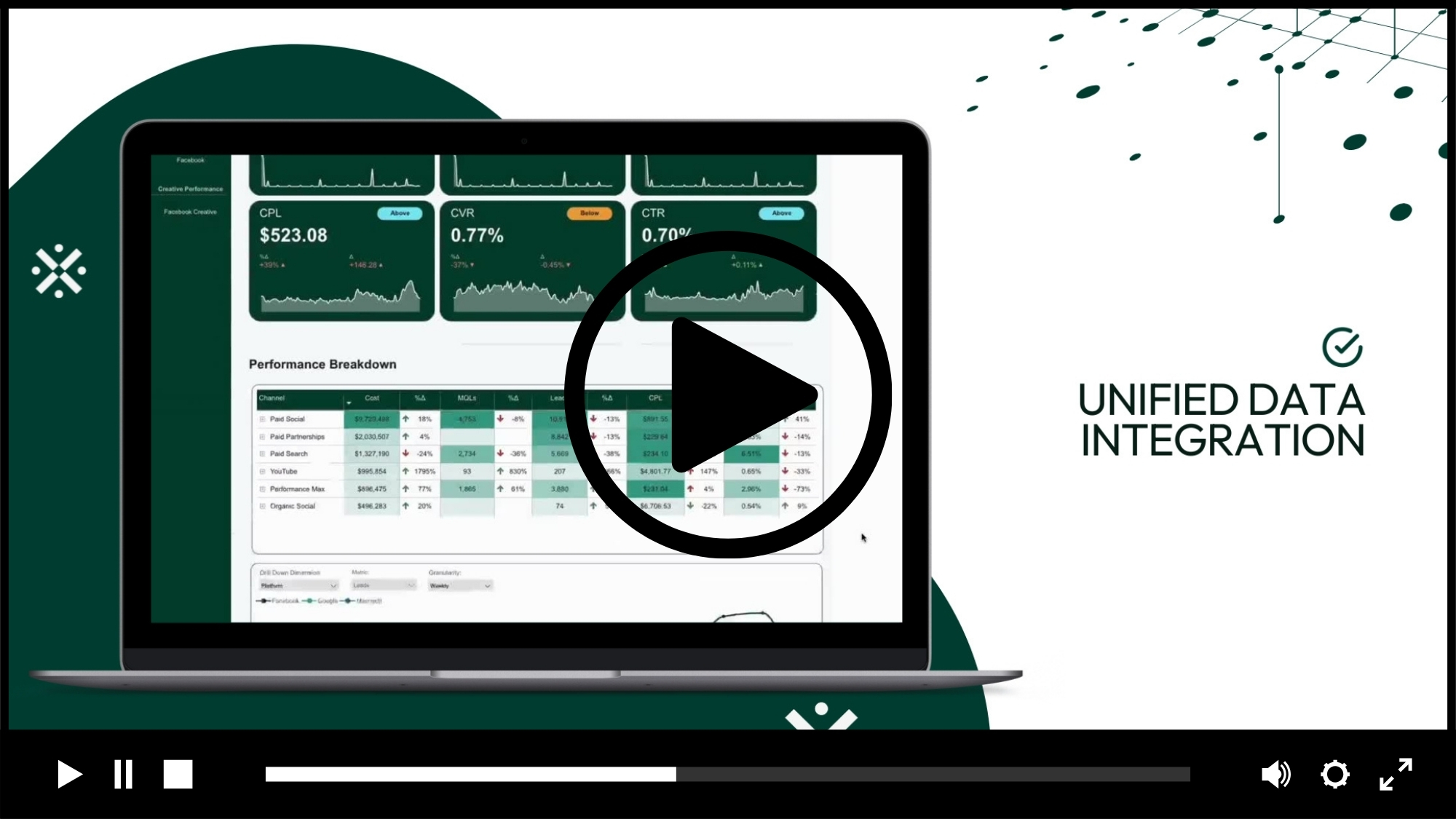
Compass is Wheelhouse’s HIPAA-compliant marketing data warehouse. It integrates and harmonizes first-party data, CRM, digital advertising, web analytics, and offline marketing data into a single, coherent view of the customer journey – built specifically for the compliance requirements and data complexity that healthcare and medical device organizations face. For brands where third-party tracking is restricted, platform data is incomplete, and measurement gaps threaten leadership confidence in marketing spend, Compass is the infrastructure that solves the problem.
What Compass does:
- Integrates first-party data, CRM, digital advertising, web analytics, and offline marketing data into a unified HIPAA-compliant warehouse
- Delivers a complete view of the customer journey across all channels and touchpoints
- Enables accurate attribution, channel optimization, and budget allocation decisions
- Powers Media Mix Modeling and advanced analytics with clean, harmonized data inputs
- Surfaces insights through customizable dashboards, flexible reporting, and AI-enabled business intelligence
With Compass, our strategists make decisions grounded in a complete and compliant picture of what is actually driving performance. That means better targeting, more defensible attribution, accurate cross-channel reporting, and the clean, unified data foundation that advanced capabilities like Media Mix Modeling require. It is the difference between trusting platform-reported numbers and knowing the truth.

Lighthouse
Search Intelligence At Scale
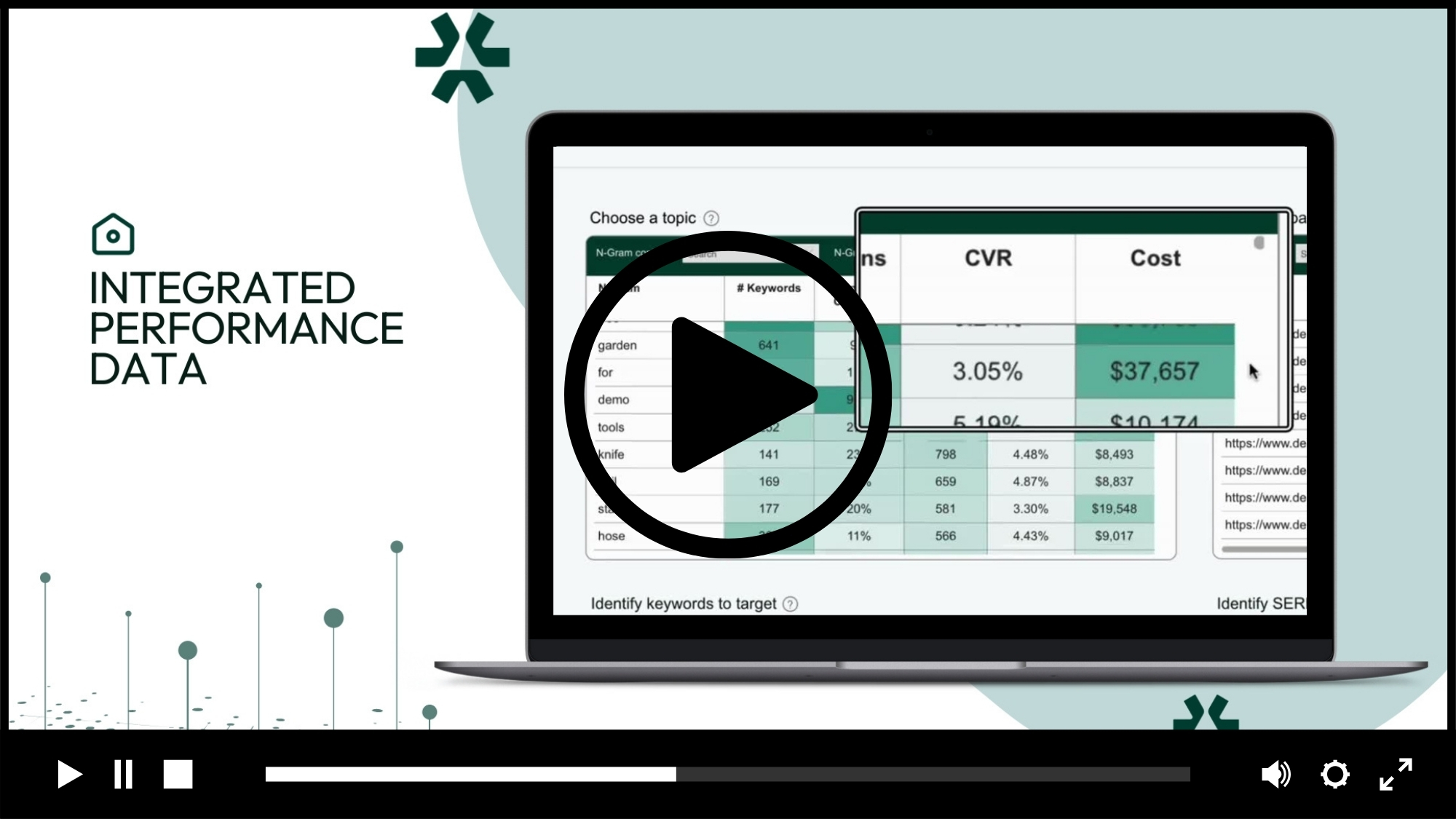
Lighthouse is Wheelhouse’s proprietary search intelligence platform. It reads the SERP the way search engines do: paid and organic together, search features broken out, competitor positions mapped, AI-generated responses tracked, at a scale no manual process or standard tool can match.
What Lighthouse does:
- Analyzes SERP data at scale, including paid, organic, search features, and AI-generated responses, in ways standard tools cannot replicate
- Uncovers high-value keyword opportunities that others miss
- Maps competitor strategies and SERP positioning to identify where your brand can gain ground
- Connects paid and organic search data to surface cross-channel opportunities and eliminate conflicting spend
- Projects the traffic and revenue impact of recommendations before resources are committed, enabling confident prioritization
- Builds long-term opportunity roadmaps that keep strategy moving
Healthcare and medical device brands compete in some of the most contested search environments online. Patients, providers, and prescribers are searching with high intent, and the difference between appearing at the right moment and being invisible comes down to understanding the search landscape at a depth most agencies cannot reach.

Compliance Monitoring
Safeguarding Analytics Integrity While Ensuring Compliance
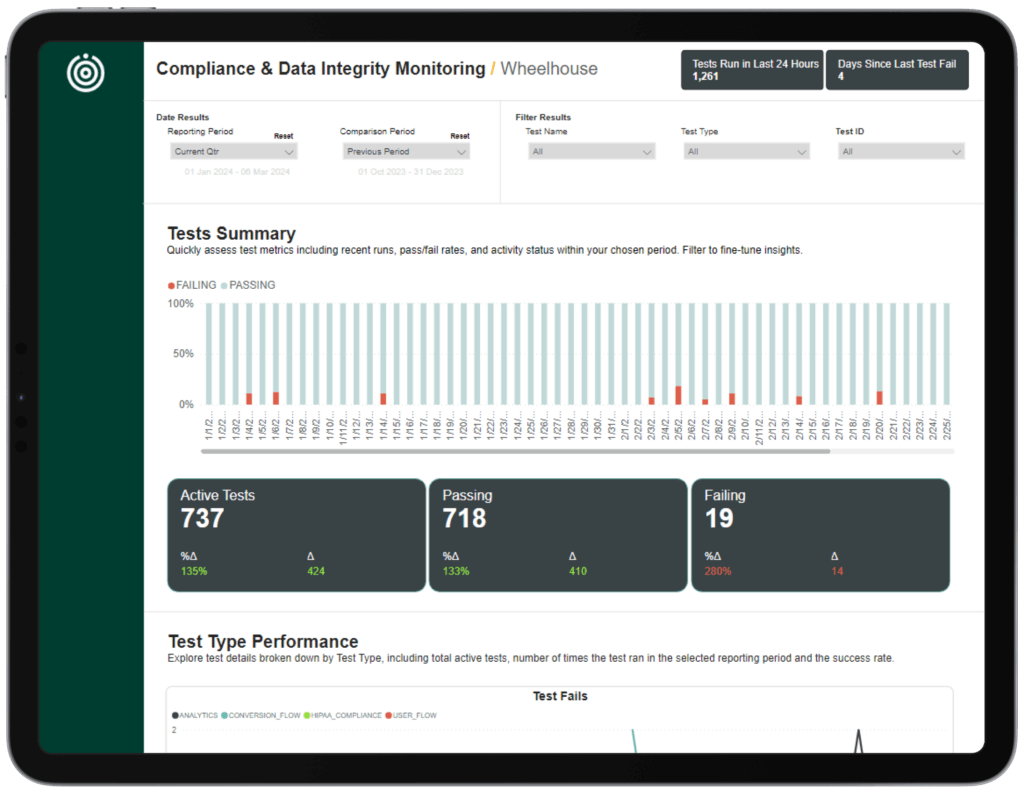
Our Compliance Monitoring solution runs continuous automated monitoring across your digital touch points, catching issues before they become exposures. Wheelhouse provides healthcare-specific configuration, the compliance interpretation, and the team that acts on what the monitoring finds.
What Compliance Monitoring does:
- Protects critical data and conversion systems through continuous 24/7 automated monitoring and anomaly detection
- Ensures HIPAA, CCPA, and GDPR compliance across all digital touch points
- Validates analytics accuracy and data collection integrity at scale
- Minimizes risk exposure by catching compliance issues before they become incidents
A compliance incident doesn’t announce itself. Tracking errors, data leaks, and regulatory violations accumulate quietly until they become a crisis. Our Compliance Monitoring solution keeps that from happening.
Privacy-first industries require the most capable digital marketing partners.
We’ve been solving problems in this space for over a decade. We know what it takes to perform.
Let’s talk about where you are.
No pitch decks, no obligation. Just 30 minutes with someone who’s navigated this environment before.
This site is protected by reCAPTCHA
and the Google Privacy Policy and Terms of Service apply.