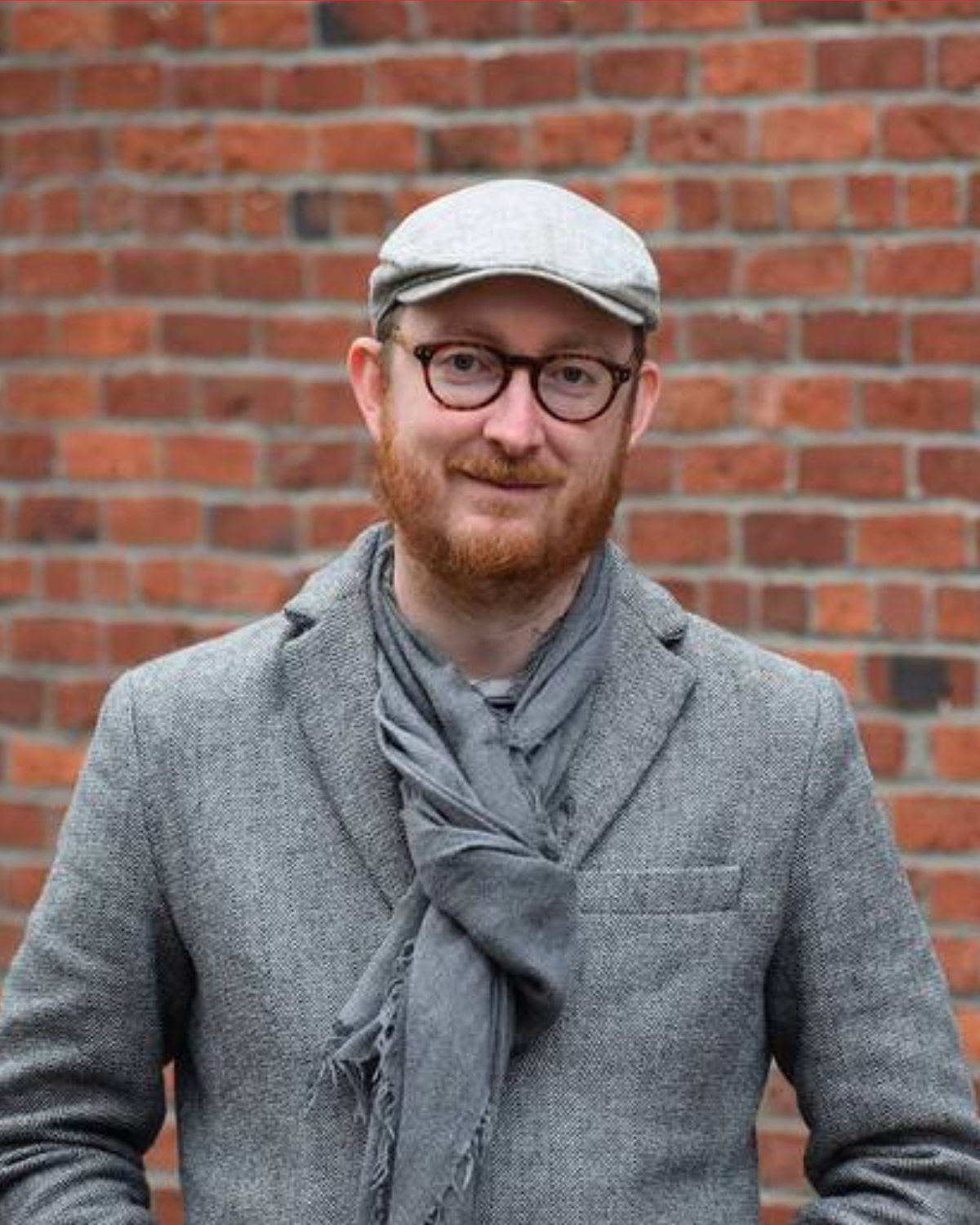
Episode 55: The Sales Rep That Never Sleeps: Building a 24/7 MedTech Demand Engine
Hosted by Aaron Burnett with Special Guest Tony Chadwick
How do you build a marketing engine that educates surgeons and drives pipeline 24 hours a day?
In this episode of Digital Clinic, Aaron Burnett sits down with veteran medtech marketer Tony Chadwick. Tony discusses his recent success helping Bioventus scale its commercial pipeline from $19 million to over $200 million. He breaks down how to transition from traditional product-pitching to an educational, story-first approach.
Listen & Subscribe:




Introducing Tony Chadwick
Aaron Burnett: I’m joined today by Tony Chadwick, a veteran MedTech marketer whose recent achievements include helping Bioventus grow pipeline from nineteen million to more than two hundred million.
Today’s conversation covers demand generation, including a simple shift marketers can make to generate demand from what might otherwise seem like a disinterested audience.
Let’s get to it.
A Message from the Sponsor
Aaron Burnett: This podcast is sponsored by Wheelhouse Digital Marketing Group. Wheelhouse provides exceptional performance marketing for healthcare and medical device manufacturers. Every Wheelhouse client saw record performance in 2025 even after implementing HIPAA-compliant data solutions. Find out more at wheelhousedmg.com.
The Shift Toward Storytelling in MedTech Marketing
Aaron Burnett: Tony, thanks for joining me. You have quite the career. You have more than 20 years of experience in senior-level marketing for healthcare and MedTech. In those 20 years, so many things have changed. You have witnessed momentous shifts in privacy regulations, the expansion of HIPAA, and the definition of PHI, along with momentous shifts in AI. What, upon reflection, has been most meaningful, most seismic? And give me a sense of your perspective on the state of marketing right now for healthcare and MedTech.
Tony Chadwick: One thing I like is that companies are humanizing their marketing more. They’re getting away from just talking about features and widgets, and they’re relating it to a problem that a physician or a healthcare facility has. At the end of the day, we market to humans, and I love that some companies are shifting away from internal language and features and widgets. I like that they’re telling stories now, which warms my heart as a marketer, because that’s how I like to do my marketing. As a storyteller, I love bringing the brand message to our customers, telling surgeons why our product helps them solve their problems better than some traditional tools.
Aaron Burnett: Yeah, I think that’s right, and I agree that storytelling is almost the last bastion of authenticity and legitimacy. With so much that can be so easily generated in terms of marketing content and copy, it’s the story that has the ring of truth that really works.
Bioventus Portfolio Overview
Aaron Burnett: Let’s talk a little bit about your career. Most recently you were at Bioventus, where you were marketing an ultrasonic device and a biologic used in combination with that device. Tell me about the product set, the solution, and tell me about your experience: how you approached the market, and what you achieved there.
Tony Chadwick: We have two tools in the surgical portfolio. If I boil it down and make it really simple, we have a cutting tool that is a novel tool for cutting vertebrae. If you’re having a fusion done, or if you’re having a discectomy, this tool is used in those spinal procedures. The reason it’s unique is because it’s ultrasonic. Traditional tools work similar to a Dremel tool, or a dentist’s tool, that is rotational. BoneScalpel is unique because it’s non-rotational, so when you get it near soft tissues such as the dura or nerve tissue, it doesn’t wrap those things like a traditional drill would. It’s considered safer than a traditional drill, and my challenge has been bringing that story to surgeons who, oftentimes, especially the older surgeons, have been indoctrinated with the drill since medical school. So they may or may not even know that this ultrasonic technology exists.
Now, the other half of that equation is the biologics. We have a portfolio of biologics designed to heal bone. So on one side we’re cutting the bone, and on the back side of the procedure we’re healing the bone. Surgeons will go in for these procedures, and they’ll put all kinds of stabilizing rods and things in the spine when they do a fusion, to stabilize the spine until it can fuse. That equipment is not designed to be long-term. The biologic is put in there. In this case, it’s allograft, so it comes from donated cadaver bone, and it’s designed to knit the bone together, the upper vertebrae and the lower vertebrae, once the disc is removed, because the metal structures the surgeons put in aren’t designed to be permanent.
Aaron Burnett: Right, okay.
Tony Chadwick: So the surgeons try to have that fusion occur in about six to nine months after a spinal procedure. So those are the two sides of the portfolio, and both sides are marketed a little bit differently.
Aaron Burnett: Okay, so tell me a little bit about that.
Growing Pipeline from $19 Million to $203 Million
Aaron Burnett: I know that part of your portfolio, your responsibility, maybe the core part, was demand generation, and that you were very successful at increasing demand generation. What I read is that you increased pipeline from 19 million to 203 million, which is pretty astounding. I think anyone would be delighted with that. Tell me about how you went about improving demand gen and building pipeline in that way.
Tony Chadwick: Okay, so to be clear, that’s part of the entire company’s portfolio success story. I’m so excited to be part of this commercial team, to have the opportunity to work alongside the sales team to grow the portfolio and deliver value to the shareholders. These guys are working hard every day to build relationships, because that’s where the sale starts. You build trust with the surgeons, and eventually the sales come down the road. Sales teams can only be in one place at one time, talking to one customer at a time. Where I come in is digital marketing, because digital marketing works 24/7. It’s the sales guy that never sleeps. It’s working to talk to multiple surgeons, or hospital administrations, value committees, purchasing agents in the hospital. It can talk to them all at the same time with multiple campaigns. I love bringing that story, working in conjunction with my cross-functional partners.
Demand generation is a little bit different from the sales process in one way, but in another way it’s the same, because you have to meet the customer where they are. You don’t know where they’re going to be in the buyer journey. You don’t know if they want to buy right now or if they need more information. But one of my key tenets in my marketing process is to be a teacher more than a seller. Eventually you’ll get the customer to the point where they want to buy, but you want to be helpful first.
Aaron Burnett: And in your demand generation efforts, are you being helpful, teaching healthcare providers, marketing to healthcare providers? Are you marketing to a larger buying committee, the organization writ large? Who are you reaching, and how did you go about reaching those folks?
Reaching Surgeons with Clinical Evidence and Peer Validation
Tony Chadwick: On the BoneScalpel side, we’re targeting spine surgeons. We want to target them primarily to build the relationship with them, to be educators for them, to talk to them about our product and about how the product solves the problems that they have. We found that there are a couple of things that, on both sides of the portfolio, doctors put credence in. One of those things is evidence. They want to see proof that your product works. So we try to shoot for level two or level one studies that talk about how BoneScalpel is safer, or how OsteoAmp provides fusion faster, its handling capabilities, or the formats of OsteoAmp. Those are the kinds of things we want to talk to them about, but we want to talk to them about it in a way that gets the point across quickly: talks about evidence, talks about safety.
Another facet to that conversation is we also want to talk to them about how OsteoAmp or BoneScalpel has helped their peers, because that’s the other thing they put credence in. What do my peers in the industry use, and what has this product done to help their patients? We know that if we can help physicians, they will help us fight the battle with VAC committees and purchasing agents in the hospital. They will be our advocates in the hospital if we can make them a believer, if we can build trust with them.
Aaron Burnett: Sure. From a channel perspective, I know that you were very successful with LinkedIn, and I want to ask about that. But how else were you able to reach healthcare providers successfully?
Multichannel and LinkedIn Focus
Tony Chadwick: Multi-channel campaigns are sort of the name of the game. You want to figure out where the physicians are after you’ve dialed in your messaging. Last year we did a study with Physicians Direct, where we used various surveys with them to validate our messaging, because we thought we knew what we wanted to say to them. We thought our message was landing, but we wanted to make sure. So that was the first step. Once you get the messaging dialed in, you can build all your campaigns around it and know it’s going to hit home.
The third aspect is: where are the fish? You want to fish where the fish are. We know that if orthopedic surgeons are anywhere, they’re going to be on LinkedIn. They’re typically not on TikTok. They’re not on X. They’re not in other places, and marketing teams are often lean. We don’t have a lot of manpower. We don’t have time to publish content in places where it’s not going to hit home. So LinkedIn is where they’re going to be if they’re anywhere. Places like Surma are good, but it’s kind of a gated community, so you have to pay to play there. View Medi and places like that are fantastic as well. There’s a high barrier to entry there, so if you have a good study, you’re willing to pay the high price for entry. But why not, before you do any of those paid efforts, get your organic methods dialed in? LinkedIn is the place to be. Make sure you get that right has been my philosophy, before you go other places.
LinkedIn Consistency Playbook
Aaron Burnett: So what did you do to make sure you were getting LinkedIn right? Because clearly it worked.
Tony Chadwick: Yes. Building on getting the messaging dialed in, making sure it’s hitting home, making sure it resonates with them, then you build your campaigns on LinkedIn to be consistent.
That’s the name of the game on LinkedIn: consistency. You’ve got to show up, you’ve got to have consistent brand messaging, and you can’t have gaps. There can’t be weeks and weeks before your audience hears from you. That was the problem with our feed when I took it over. It had weeks and months of gaps. I think it had posted eight times before I came on board. So that was one of my big goals coming in: make sure we post consistently, make sure people are hearing from us every week, and make sure the brand shows up consistently there. That was part of the increase in the metrics that you saw, scaling the content out on LinkedIn. It was a fantastic success story, I thought. Our followership grew there 20% year over year, every year, and I was really proud of those numbers.
Aaron Burnett: So to quantify what you just described, you increased the number of touchpoints in your content marketing by nearly 1,000%.
Tony Chadwick: Every week, our audience was hearing from us twice, and every year it grew: 10% one year, 20% another.
Ascom Healthcare Smartphone
Aaron Burnett: Earlier in your career, you spent more than 15 years at Ascom, and one of the things you were focused on, perhaps the largest, was targeting mobile device use by healthcare providers in a hospital setting. Tell me a bit about that experience, and then I’ll have some follow-up questions after you tell me a little more about that context.
Tony Chadwick: We had a product that was the first smartphone purpose-built for healthcare. We noticed that nurses were taking a lot of steps in the course of their shift. A patient would page over the intercom, and a nurse would go see what they wanted. That creates a poor healing environment, with all the noise. The nurse goes and sees what they want. She goes and gets the ice chips. She takes them back. She’s walking 10 miles in her shift. So we said, “What if we could bring the information to her? What if we could let her talk directly to the patient?”
This smartphone we came out with was the first one in healthcare. It had a smart operating system like the one she was used to using in her personal life, but she could talk directly to her patient. She could get lab results wherever she was in the facility. She could see X-rays. She could get messaging from her colleagues. This saved her a ton of steps. So we saw the problem, and we presented a solution that would put time back in the nurse’s day.
Aaron Burnett: Right.
Tony Chadwick: I was really proud that we actually identified a problem and a solution for it.
Aaron Burnett: All right, so two questions. One is kind of an aside, but I think it’s very interesting: 10 miles a day, is that accurate?
Tony Chadwick: Yeah, that’s a real stat. In a 12-hour shift, they can typically walk 10 to 12 miles. That’s a lot of steps. That’s a great goal, but, man, how exhausting and how inefficient.
Aaron Burnett: Yeah, you’d need new shoes every other week.
What’s the difference between the approach you took then and the approach you’ve taken more recently at Bioventus?
Tony Chadwick: Well, one similarity is both device sets were FDA cleared. So there was the FDA clearance hurdle, and that was similar back then to now. Some of our devices now are internal to the patient rather than external, so that product didn’t require the same kind of scrutiny that our products require now. But I still think we’re solving problems for healthcare professionals.
Aaron Burnett: Right. And how did you go about reaching prospects? How did you go about getting your message out in the days of Ascom versus today, given all the changes in tools, channels, industry, and regulation?
Tony Chadwick: In both circumstances, we talked heavily with the client, which is a healthcare provider. We talked to nurses back then and asked, “Hey, what are your problems? What are the things you’re facing in the course of your day?” Similarly, we still talk to surgeons now.
Sometimes the marketing team will leverage outside parties like Physicians Direct. Sometimes we’ll leverage relationships our sales team has, so we can speak directly to the surgeons and see what problems they’re running into. But it’s a relationship business. Back then, and now, we still rely on those relationships to help us improve our game.
From Designer to Marketing Leader: A Unique Career Path
Aaron Burnett: I know you began your career as a designer, 20 years ago, and you’ve worked your way up to hold very senior marketing positions. I think I’ve read that you’ve reflected that this makes you kind of an odd duck in the world of marketing. How has that made you an outlier, and, more importantly, how has it benefited you to have had all of those roles and a number of different skill sets that aren’t typically found in one person?
Tony Chadwick: I think that a lot of marketers aren’t career marketers. They’ll spend time in other areas of the company, in other businesses. But I’ve been in healthcare marketing for 20 years, and I’ve always been in marketing. So it’s not just what I’m doing at the moment, it’s what I’ve always done.
The good thing about my progression is that I understand a little bit about what all these different people in the marketing department are dealing with, what their pain points are. If I have a colleague, let’s say a designer, I can come up to them and say, “Have you thought about this?” or “I understand what’s going on here with the timeline on this piece,” or “How can I help you with that?” I speak their language. If I’m talking to the web team and they’re making updates to a page, I understand usability design. So I relate to all these different roles on the marketing team. And what’s more, I’ve been to business school. I have an MBA, so I also understand a little bit about my cross-functional partners and their pain points as well.
Three Things a New Demand Gen Leader Should Check First
Aaron Burnett: If you were speaking with someone who’s just taken on a role where they’re in charge of demand gen for a company marketing to healthcare prospects, whether MedTech or a healthcare solution, what would you tell them to look at first? What are the three things you would say: “In your first two weeks, you need to deeply understand these things and diagnose and decide what you’re going to do”?
Tony Chadwick: Well, you’ve got to understand the customer. I think one of the pitfalls of MedTech marketing is that we think our messaging is hitting home, but it’s not really resonating with our audience. We lose objectivity after a while. Another pitfall is doing things the way we’ve always done them. You think your messaging is dialed in, but the process has always been the same, and the messaging needs to evolve, but it can’t evolve because so many people are attached to it. So it’s good to, every now and then, do surveys with your prospective customers and find out if your messaging is actually hitting home. Is it actually addressing their pain points, or is it something you think is effective and it’s not?
Aaron Burnett: Yeah.
Tony Chadwick: So that’s one of the things. Once you get that messaging dialed in, you can build campaigns that are actually going to be effective. The third thing is: play where your customers are. Don’t waste time just because somebody saw something, or somebody’s nephew told them this, or somebody’s brother-in-law told them that, “Hey, you guys need to be on Twitter.” Sometimes marketing teams are influenced by the highest-paid person in the room, by their opinion, not necessarily backed by facts or data, and they go off and chase that shiny object, and it’s not necessarily going to have your campaigns hitting their targets.
Aaron Burnett: Sure. Yeah, I think Twitter, anyway, is kind of a dangerous place to be marketing these days.
Tony Chadwick: Yeah, you don’t need to be splitting your efforts across all these different places just to say you’re there.
Aaron Burnett: Yeah, exactly.
AI’s Role in Healthcare Marketing: Promise and Pitfalls
Aaron Burnett: Talk to me a little bit about AI. As I mentioned, you have a long and storied career, most of it pre-AI. Tell me about the role of AI in your marketing, and the role you envision for AI in digital marketing going forward.
Tony Chadwick: Earlier I talked about how marketing teams are strapped for time, so I see potential there to streamline some repetitive tasks. AI can do that. I’ve seen some examples of copywriting that has obviously been generated by artificial intelligence, and you can tell it’s not quite right. We’ve had some copy come from agencies that you could tell wasn’t human. That’s one of the pitfalls, but I think there’s potential for it to automate inboxes. If you have campaigns going to an email address, you can have it screen some of those responses. I think a lot of companies are dabbling with it right now. They give their employees a copilot or whatever because it’s low-hanging fruit, provided as part of their corporate software package. I don’t think many companies are using it effectively, and it’s not where it will be in, say, three years. But it’s evolving so fast, it’s really interesting to see how some of our top competitors are going to use it in the future. I think there’s another danger: you lose that human connection, and I think that’s so important in your marketing, because at the end of the day, we’re marketing to humans. We want to heal patients and get them back to an active life as soon as possible.
Aaron Burnett: Yeah. I do think that if you start by giving your employees Copilot, you’re really just trying to teach stoicism. It’s a pretty frustrating place to start with AI.
Tony Chadwick: Yeah, it’s kind of the bottom rung of AI, and I think companies are doing it just to satisfy that ask from their employees.
Aaron Burnett: It’s also built into the Microsoft platform they’ve already got. So, yeah. I’m sure Microsoft will eventually be successful with AI, but it’s not apparent right now.
Tony Chadwick: We’ll see.
Aaron Burnett: Yeah, exactly. We will see.
Proving Marketing’s Contribution to Pipeline
Aaron Burnett: Let’s come back to the demand gen performance you drove. How were you able to concretely demonstrate the contribution of marketing to that increase in pipeline?
Tony Chadwick: It’s important to be able to measure your campaigns. If your campaigns are, say, Google campaigns, it’s important to have that integrated with a place where you know customers are going. On the back end, Google Analytics needs to be integrated with your Google Ads, your AdWords, and the Google widget needs to be installed on LinkedIn. It’s really important to have that integration so you can track it as much as possible. When you turn that lead over to your sales team, it’s important to have a CRM in place so you can measure where that lead went once you turn it over, and you can also implement some guardrails, some timelines for follow-up. You could ask your sales team, “Hey, I want you to follow up on this in a week,” and note it in the CRM, but there has to be some accountability. So I think it’s important to have a partnership with your sales leadership so they can enforce follow-up on leads. It doesn’t do any good for me to pass a lead over if it just falls through the cracks. I think a lot of companies have trouble investing in that integration across all the different touchpoints where a customer could possibly enter your campaign. That’s one of the weaknesses I see in a lot of marketing departments.
Aaron Burnett: Yeah. And it’s important to note here that because you’re marketing to healthcare systems and healthcare providers, it’s in the healthcare arena, but you’re not a HIPAA-covered entity. So you don’t deal with the same data privacy constraints that all of our clients do, for example, or that healthcare providers themselves deal with. Listening to you, it’s kind of like, “Oh right, the good old days,” when you could track everyone and pass that tracking off to the CRM and have a definitive path to tie it all back. All right, let’s switch gears a little bit.
Ultramarathon Mindset
Aaron Burnett: You were telling me just before we started that you’re about to run an ultramarathon.
Tell me a little bit about that, because that’s a thing I have never done. I’m reasonably certain it’s a thing I will never do, but it’s so impressive. I have a lot of respect for it.
Tony Chadwick: I always tell people, if running’s not for you, just pick an activity that clicks with you, something you can stick with. I’m a lifelong distance runner. I ran collegiate cross-country. I was a letterman at East Carolina University. A few years ago, an old buddy of mine from the cross-country team came up and said, “Hey, we should get together, get the old gang together.” But instead of inviting us to lunch, he invited us to do an ultramarathon with him. This will be my fourth one, and it’s just a way for us to get together and hang out, and it kind of ensures that we get together at least once a year.
This race is a 24-hour run. It’s essentially as many miles as you can do in 24 hours. My goal is officially 80 miles, because I did 63 miles there last time. So I’m looking forward to this race to see what I can do.
Aaron Burnett: That’s amazing. Alright, so you want to run three marathons in 24 hours.
I know from speaking with other people who run ultramarathons that there’s a point pretty early on when the battle isn’t physical anymore. So tell me about that experience. What’s it like to be in the midst of running when the battle is no longer physical and it shifts to mental? What are you doing in your head to keep going?
Tony Chadwick: I’ve heard it described as 10% physical fitness and 90% negotiating with yourself. There comes a point in the race, they call it the cry point, where you just do not want to run anymore. It’s typically your mind trying to tell your body to stop running, and you have to overcome that. Part of the process in training is getting used to being comfortable being uncomfortable. You do these long runs, you build up gradually, you do a lot of slow miles to avoid injury, so on race day, you’ve experienced it all in practice.
Aaron Burnett: Does that carry over into the rest of your life?
Tony Chadwick: Well, it gives you determination. It gives you focus. It gives you the ability to focus on the long view. It’s not about instant satisfaction. It’s not like in baseball, where you run 90 feet from one base to another, or in football, where you run 100 yards and get that instant reward. The reward is months down the road. I think Muhammad Ali said, “The battle is won or lost months before I do my dance under the lights.”
The Takeaway: Humanizing Marketing in the Age of AI
Aaron Burnett: All right, so what have I not asked you that you would love to talk about?
Tony Chadwick: Forward trends in marketing. There are things I see happening, one of which was helping patients and humanizing our marketing. I think companies are kind of doing that. I’d like to see them take that a little further.
That would be a trend I’d like to see. Because I kind of feel like, with AI coming in, there’s an opportunity to humanize, since AI can grind out a lot of marketing at one time, but it kind of loses its soul a little bit. So I’d like to see marketing teams push that a little bit, push the human aspect.
Aaron Burnett: Right, and this ties back to the discussion we were having about storytelling and the authenticity of storytelling. Do you anticipate a kind of bifurcation, a separation between the content or digital marketing work that might be supported or automated with AI, and the super high-value work that requires high touch and is always executed by humans?
Tony Chadwick: Yeah, I think there’s an opportunity to do more video that brings the patient story forward in our marketing. I think there’s a lot of clutter out there, so a challenge for marketers is always: how do I bring my brand to the fore? Because oftentimes our products have the same features as our competitors, so how do I differentiate? I think one of the ways we do that is with authenticity, as you alluded to.
Aaron Burnett: That’s a very good perspective. Nice place to leave it.
Thank you for chatting with me.
As Tony so clearly illustrated, building a high-performance MedTech marketing engine requires consistency, educating instead of selling, and building authentic human relationships and trust over time. Whether you’re trying to win over spine surgeons in the operating room or nurses who walk dozens of miles on each shift, success is enabled through long-term focus and through messaging that reflects the voice of the customer.
If you enjoyed today’s discussion, please subscribe to the podcast, leave us a review, and share this episode.
I’m Aaron Burnett, and I’ll see you next time on The Digital Clinic.
Sponsored by Wheelhouse DMG