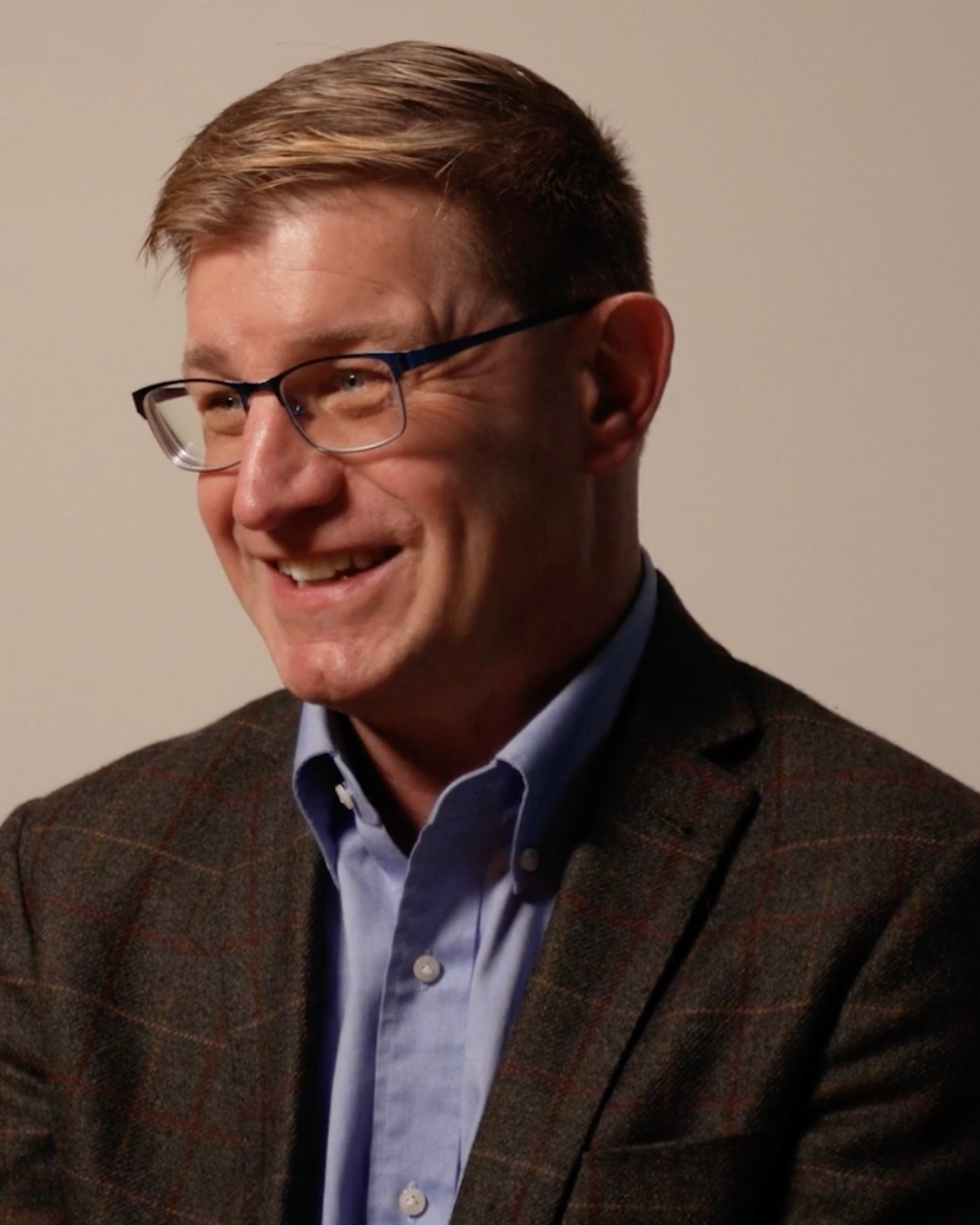
Episode 42: How To Find Meaning & Performance in Health IT
Hosted by Aaron Burnett with Special Guest John Lynn
In this episode of The Digital Clinic, we explore the patterns shaping healthcare marketing and health IT with John Lynn, Founder and Chief Editor of Healthcare Scene, the organization behind Healthcare IT Today and the Swaay.Health community, two of the most recognized names in healthcare media.
John shares his perspective on the current state of healthcare marketing, drawing on nearly 20 years of interviews and conversations with CMOs, digital marketing directors, and health IT leaders. We discuss why budget constraint, far from slowing organizations down, is quietly becoming one of the most powerful catalysts for creative and targeted marketing strategy, and how the organizations embracing that reality are pulling ahead of those waiting for resources to return.
The conversation covers John’s honest assessment of AI in healthcare marketing, where it is genuinely moving the needle, where agentic workflows are burning more relationships than they’re building, and why he believes robotic campaigns will struggle until the humans on the receiving end are no longer the decision-makers. We also explore the three AI breakthroughs John believes will have the most transformational impact on the industry: ambient clinical voice documentation, intelligent data summarization, and the next generation of chatbots that go far beyond website interactions.
John reflects on the deeper shift he sees happening across healthcare marketing and health IT, a growing hunger for meaning and purpose in the work itself. From his own journey as an IT guy turned media entrepreneur to the communities he has built around shared success stories, John makes the case that highlighting what’s working and pushing the industry forward is not just a media philosophy. It is a competitive advantage.
This episode delivers actionable insights for healthcare marketers navigating budget pressure, AI adoption, and the evolving skill sets that will define the next generation of leaders in health IT and healthcare marketing.
Listen & Subscribe:




From IT Guy to Media Entrepreneur
Aaron Burnett: How did this lead to here? What’s that story?
John Lynn: When I started blogging, blogs just started proliferating, and then over time, blogs became podcasts, which became videos, which became newsletters, which became communities, which became conferences. And now we have all of those things. I guess, you know, as a media person now, you know, it’s kind of like rabbits. You know, you have one rabbit, and they just keep popping up. You create new assets. So, yeah, I mean, it’s an interesting story. You know, I was an IT guy by background. I’m literally tech guy on Twitter, right? Like, that was my persona. In some ways, I still am, right? Even though I lose a little bit every day.
It’s really funny when people are like, yeah, John’s a great marketer, or John’s a great journalist or whatever, because in my heart, I’m an IT guy, right? Like, I’ve trained as an IT guy. I love technology. I love the way technology does it. But it’s fair to say that the reason that Healthcare Scene the overarching company of healthcare IT today and Swaay.Health has been successful is because of my marketing skills, because of my writing skills, because, you know, now videos and podcasts and things. I think I’ve always been entrepreneurial.
Building Something People Pay For
John Lynn: Like ever since I saw my dad trying to be an entrepreneur as a kid, I loved that. Like I loved the idea of building something and building something that people would pay for. It’s one of the most satisfying things, that you can create something so valuable that people will actually pay for it. And maybe that’s a little bit of projection of my own feelings about money and how I don’t spend on a lot of things. I’m pretty frugal. And so, the fact that someone will spend their hard-earned money on something I created is one of the most beautiful things I think that you can do, especially when they do it multiple times, right? Like when they buy it, they got value, and then they do it again. That’s like so gratifying to me.
So, I think that’s where the journey really started. I was an IT guy, but I wanted to be an entrepreneur. So, nights and weekends I started blogging and I started writing. I put ads on from day one. My goal was to make money. Sure, I was going to learn SEO, but I was learning like, how do you make money online? Right? That was part of that process of learning. And anyway, there’s a lot more to the story. It’s been shared a bunch of times on the internet. You can go find it, but you know, what happened for me is I made it to that first page of Google for EMR, for electronic medical record, and then four years later, I got lucky. Or you could say I worked really hard for four years and then the work finally paid off, and they gave $36 billion of stimulus money for EMR. That blew up the sites. They became mainstream. People started caring about it because they wanted the government money. And, you know, 15, 16 years ago almost, I quit the day job to become a full-time blogger at the time. And now, you know, running a full media publication. So that’s kind of the background story.
Aaron Burnett: That’s a great story. It’s inspiring, and you’re right, it’s empowering to know that you can create something that someone else will pay you for, and then you can do it in a fairly itinerant way. You can be plopped anywhere on the planet and you’ll be just fine.
John Lynn: That is the nice part. It literally can work anywhere, and sometimes I do.
Aaron Burnett: So, I’m curious. You have these various publications and podcasts. You produce a tremendous amount of high-quality content. How big is your team?
Running a Distributed, Global Team
John Lynn: Yeah, you know, it’s hard to count because we have a lot of part-time people. We have an entire team in India. You know, it’s about 15 to 20 across all the different people that contribute on a regular basis to do it. So, we’ve embraced that idea that it doesn’t matter where you are. I just want to hire the very best people, the ones that fit the need of that time. So, you know, it’s funny, we actually did a holiday video and we all did, you know, a certain thing, and then we put the city and state that we lived in below it, and I realized none of us live in the same city and state. Like literally none of us. Okay. So, there’s a couple people. You know, I live in Henderson, Nevada, and one lives in Las Vegas, so they’re kind of close, right. A couple live in Toronto, although they don’t really live in Toronto, they live outside.
But it was just really ironic that our team is so distributed and we also are very international. We have someone from Chile, we have a team in India. And it was funny, that was the other holiday video we did, we all wished happy holidays in a language that we speak, because I think 80% of us speak another language. Yeah, it’s really cool to be able to work with people that have multiple talents beyond just what they do in their day job.
Aaron Burnett: Yeah. That’s amazing. I have read that you’ve described Healthcare Scene as the friendliest media company around, and I’ve witnessed that ethos when I went to Swaay last year. I very much got that sense as you were delivering opening remarks and as you again appeared on stage to MC various aspects of the conference. A palpable, clear sense that you were emotionally invested in the conference and you were emotionally invested in that audience. And I get the sense that that permeates everything that you do. Why is that? What did that come from?
John Lynn: Well, I think Aaron just did a nice way of saying I cried on stage or something probably, which is not common for me.
Aaron Burnett: You did. But listen, I’ve been to a whole bunch of healthcare conferences just like everybody else in this industry, and I’ve never witnessed someone who clearly cared. I’ve witnessed people who are super smooth and people who clearly had an agenda and people who were good at evoking or attempting to move a crowd. But I have not experienced someone who was so authentic and sincere in the way that they opened a conference, and I felt that that set the tone for the conference.
What Authentic Leadership Looks Like
John Lynn: It’s funny because at the very first Swaay.Health conference, originally called HITEC, I cried on stage. I think it was a lack of sleep and a “I can’t believe this actually worked.” You know, like, I literally didn’t have a choice. Like it just came out, you know? And it was interesting. I wouldn’t recommend it, you know, like it’s not a strategy, especially for any man that wants to cry on stage. But you’re right, it did two things for us. It made everyone in the room realize, wow, he does care about this. We want to get behind him and help support him and make it a success. And then two, which may be actually even more powerful than the first one, it allowed everyone else to be vulnerable as well, and to let their guard down and to admit that, hey, this isn’t perfect. I struggle. I have challenges. I need your help. And that changed it. So, I wish I could say it was intentional, you know, like it was part of that master plan, but it wasn’t.
The Win-Win-Win Model
So, I mean, that at the end of the day is what Healthcare Scene is all about. We want to make a meaningful difference in the lives of those who read our publications on Healthcare IT Today. I want to make the life of the CIO easier. And everyone that reports to them, you know, and on Swaay.Health, the healthcare marketing professionals, I want them to get something useful. And when we looked at it, you know, Colin has been along for the ride for the last five years or so as well, and has helped to shape what we do. And our goal is to create win-win-wins. Right? It doesn’t always happen, but if we do it right, it can. That’s the potential of every single deal that we do. So, if you’re advertising on Healthcare IT Today, potentially the advertiser’s going to get a customer. They’re going to provide great content, which the user’s going to get, which is going to help them be able to make the decisions they need to and understand the product domain or understand the challenges, right? And then we get paid for facilitating that connection and distributing it. Ideally, that’s what we have. Or, you know, in your case, you sponsored Swaay.Health. Ideally, you’re getting the benefit of potential customers. Those who attend Swaay.Health are going to potentially find an agency that can help them be more successful at what they’re doing. And then obviously we get paid for having the sponsorship.
John Lynn: So that is why, you know, I think what we do is so beautiful. Our goal is that everyone wins. We’re not trying to screw one person, take their money so that then we have to go screw someone else, right? Like that’s not how we want to approach it. And it doesn’t always work, right? Sometimes people sponsor and they don’t get a customer, right? Or sometimes they sponsor and they put out content that’s not so great, and so then the reader sees something that’s not so great, right? But ideally, that’s what we’re striving for.
The other angle to it too, Aaron, that’s really interesting, is that there’s a place for investigative journalism. There’s a place for breaking news, so I’m not discrediting those in any way. Right. Like there’s value in both of those things. That’s just not who we are. Right? Like Colin and I can’t really stomach what you need to do to be an investigative journalist. We can’t really, you know, like breaking news, we don’t want our life to be sitting there, almost like we’re on a caffeine high, right? Like, trying to think, am I supposed to be publishing something? Is there something that’s really breaking news in what we do? I’m not sure. There probably are some stories, but it’s not who we want to be.
The Friendliest Media Company in Healthcare
John Lynn: Who do we want to be? We want to be the people who highlight the stories of success so that other people can see that and then model it in their own organization. So, I think that’s where “friendliest media organization” comes from. It’s just who we are as people. We want to highlight the successes and push the industry forward rather than do other things like holding people accountable or breaking news to try to, you know, get the latest from us. No, we want to be the thoughtful followers who provide a lot of value and improve your life by giving you insight and perspective into the successes that people are having.
Aaron Burnett: I think that’s tremendously useful. You have this very interesting purview. You get to listen to all of these marketers. You get to interview all sorts of people in marketing and in healthcare IT. Thinking back on the past 12 or 14 months, what are some of the most astounding achievements that you’ve heard from marketers, or innovations that you’ve heard from marketers?
The Real State of Healthcare Marketing Right Now
John Lynn: I think many are struggling, quite frankly. It’s a tough time on the health IT side. Most of their organizations have cut their budgets unless they’re like some massive AI company that’s raised too much money. They have some budget, right? But most of them are saying, hey, sales are taking longer than usual, and the people buying aren’t buying as quick. They may be having to cut, let alone buy. So, I think they’re struggling. And then on the provider side, we know the cuts that they’re going through, right? Margins were small, they’re struggling as well with lower reimbursement, higher expenses for supplies, higher expenses for staff. And so, they’re coming to the organization and saying, well, where can we cut? It turns out IT and marketing are great places to cut. I can’t cut my doctor, right? Like that’s harder. I mean, you do do some staff cuts, right? IT and marketing feel like things that they can cut without damaging it. Now, that could be a discussion for another day, whether that’s true or not, but that’s, I think, how many leaders go. And so that’s the environment we’re in right now. I would describe it as an uncertain environment.
Why Constraint Encourages Creativity
John Lynn: When you’re faced with uncertainty, what do you do? Constraint actually encourages creativity. So, I think that’s what we see from organizations. Hey, I don’t have the unlimited resources that I had previously, so how can I be more creative and maybe even more targeted? One of the coolest ones that I’ve seen is where they use data to understand who to target, right? I mean, what a stupid thing that I just said, right? Like, oh yeah, let’s use data to target. Right? But the sophistication with which they’re doing it, it’s not some broad-based, okay, this TV channel has 45 to 60-year-old males or whatever, right? Like it’s not that broad-based. I’m talking about very sophisticated, targeted data marketing where they’re saying, hey, who is my potential buyer? Oh, it’s a 40 to 60-year-old male that reads GQ, that has this amount of salary, that makes this much money, et cetera, et cetera, right. And then they say, where do they live? And then they look where they live, and then they do a very targeted campaign to that area where they see a concentration of that type of person.
Right. Or on the health IT side, you can do the same. Right? Okay, who are the people that I need to influence? And they’re doing very targeted outreach to them. I think what’s interesting, and slightly different on the health IT side versus the provider side, is you can’t just do the targeted marketing. The targeted marketing can get you the internal person who’s going to essentially advocate for your solution. But guess what? If the other 10 people don’t know about you, then you’re still screwed on the health IT side. You have to do very targeted outreach and you have to do broad-based marketing so that the CISO doesn’t say, who is this company? I’ve never heard of them. I don’t trust them. Because if they say that, I don’t care what kind of advocate you have in a healthcare organization, you’re not going to make that sale.
I think there’s a lot of confusion around AI. I think people see that as potential, but I don’t know that anyone’s cracked the code. We’ve seen some minor breakthroughs, but I don’t know if I’ve seen anyone quite say, hey, this transformed everything that we’re doing. Certainly it’s a tool in the toolbox, but I think that one’s still a bit, you know, the jury’s still out on it.
Aaron Burnett: Yeah, I agree. We use AI extensively internally to augment processes and analysis and that sort of thing. What we have noted is that even in the most successful use cases, and we test and vet a lot, you still can periodically reach these points where the result that you expected to see all of a sudden isn’t the predicted result. It’s as though the custom project, the agent that you created has forgotten all of the instructions, and you have to have a human who intervenes and says, wait a second, this is what you’ve been doing for the last two weeks. Remember? Oh so, sorry. Yes, I’ll do that. We see a tremendous impact when there’s a human actively involved. We have not seen anything that has been able to be successfully systematized in what is described as agentic workflows, where you can just let something run.
John Lynn: I mean, think about how many emails you’ve gotten. I’m sure you’re the same as me, although my name’s out there maybe a bit more than yours, so maybe I get more.
Aaron Burnett: I think so. Yeah.
Why Agentic AI Workflows Are Burning Relationships
John Lynn: Because I publish a lot of content, right? Yeah. So, they scraped the crap out of me. But how many emails have I gotten just today that have said, don’t you need to hire a programmer? Don’t you need a marketing one? How would you like it if I brought you three clients per day, blah, blah, blah, right? Like, you could see it. And you realize this is an agentic workflow that scraped something and just spammed the heck out of everyone that it could find. And I look at that and I think to myself, does that work? Like, I can’t imagine that it does, right?
Aaron Burnett: What’s the upside on this? Yeah.
John Lynn: All I do is hit the spam button. Right? Like, I don’t know, like does that work in healthcare? I don’t think it does. I think if anything, it burns your relationship where they say, I’m never working with this company again, if you do it that way. And so, it’s great that we can do that kind of stuff. I think we are going to discover, so I am pro-AI, and I think it’s going to change the way we work. I just don’t think we’re there yet, right? As far as really revolutionizing the way we market to people. Maybe the key change that needs to happen is robots need to start making decisions, not humans, because robots have a real challenge convincing humans to do something, right? And so, until the robots start making decisions, maybe the robotic campaigns aren’t going to be effective, because stories influence humans in a way that robots have a challenge doing.
Aaron Burnett: Yeah. That’s an interesting point. You’ve interviewed so many people and listened to so many people at conferences. What patterns do you see that others may be missing?
John Lynn: There are two types of people when you start doing a podcast. There’s the type of people who are so overwhelmed with the operational minutia of their job that they can’t think strategically. And then there’s the people who are able to get away from the operational minutia of the job and have some more strategic thinking.
How AI Is Freeing Up Strategic Thinking
John Lynn: What’s fascinating to me, and I’d say the big trend that I see in a lot of what we do, is that the technology that’s being implemented today, that’s being worked on today, is going to help solve that problem in a dramatic way. All those operational minutia things took up so much mind share and so much bandwidth. And this is true on the health IT side. This is true on the healthcare marketing side. We’re going to be able to offload a lot of that to the machines, if you will, and that will free us up to do more strategic thinking, if we allow it to, right? There are going to be some people who don’t embrace it, that’s just the reality of adoption curves, they’re not going to realize that’s a potential. They’re going to be behind, and they’re just going to say, I like the old way and I’m going to hold out till I can retire. Hopefully they get there, right? You know, like we saw this with doctors. It happened a lot. They’re like, I don’t need to do EHR. I want to retire in three years. Well, then economics change, and it’s like, oh crap, five years later, they’re still not retired. And guess what? Now they have to do the EMR, right? Like, so we’ve seen this before. The same thing’s going to happen. It’s a natural part of any sort of adoption cycle.
John Lynn: But I think that’s one trend I’ve seen. AI is taking away some of that operational minutia that takes up so much overhead and doesn’t allow us to think strategically. So, I’d say that’s one trend that I’ve seen with people.
Finding Meaning Beyond the Paycheck
John Lynn: The other one is there’s a really interesting trend of meaning beyond your job. The change of the workplace is something really interesting that’s happening across every industry and every type of job, whether it’s a marketing job, an IT job, or a communications job. And so, I actually think healthcare has an advantage in this. If I’m going to do something and I’m going to devote my life to it, because we are going to devote part of our lives, at least, to our jobs, then I want to have some meaning to it. And what is the meaning that I’m going to find from doing my job? Certainly you need to care for your family, right? You need to make some money, you need to care for it. But I think a lot of people are realizing that making money isn’t the end-all, be-all. You can make as much money as you want and be unhappy. So, if I want to be happy, then I want to have some meaning in the work that I do.
And luckily, what we do has a lot of meaning for the majority of people, whether it’s in the Swaay.Health community or Healthcare IT Today. They’re good people trying to make a difference in the lives of patients. And to be fair, I get a little jaded too, right? Like when I first came in and got my first job in healthcare, I remember thinking to myself, how cool would it be if the technology that I implement, which was what I was doing at the time, actually saved someone’s life? I’m a romantic, obviously you could tell that. But that was the romanticism of like, hey, this would be cool if this could happen. And then I think over the years you get jaded in different ways, but I think in the back of the head there’s still that thing: am I improving the lives of those who I interact with? And I think that’s going to be valued more and more increasingly over the years.
Aaron Burnett: Yeah, I think that’s absolutely true. We are also in this interesting cultural moment where wealthy people for a time were deified, and now we’re getting a closer look at the aspects of wealth that can be repulsive or corrosive. Unattractive, and certainly didn’t make people happy. So, I think you’re right. There is a thirst for meaning in the work that we do.
John Lynn: And I look at my kids and I think there’s going to be an entire other trend about what is the purpose of work and where do I go and where do I want to spend my time? I don’t know how that evolves, right? I’m interested, you know. But I think they want to be more creative with their work, which is really interesting because I don’t consider myself a very creative person in general. And so, the fact that my kids are is so fascinating for me to watch.
Aaron Burnett: In my education and in my lifetime, creative pursuits, academic pursuits, intellectual pursuits, physical pursuits, those things tended to be siloed and consistent with your identity. Your identity was this thing, and maybe you did a little bit of something else, but you were this thing. For my kids and their cohort, it’s all much more fluid. You have some of this, you have some of that. You don’t need to anchor to a particular identity, and so for them, creativity is an essential part of life. It doesn’t need to be their identity, but it can be a passion, something that they’re very good at and want to incorporate in their lives without making it the only thing. Do you have a similar experience with your kids?
John Lynn: Yeah. It’s interesting to think about. I think it is more fluid, you know. I think it will be interesting to see how that evolves because we have taught kids to do one thing, just play that sport. And if you’re playing that sport, you can’t play the other three, right? Like you’re in band, okay, you’re a band person. You can’t be in band and choir. And so, it’s interesting how I think that will influence them. But I think there’s something even more interesting that I’ve been pondering.
The Skill That Will Matter Most in an AI-Abundant World
John Lynn: I have five kids, so I have a breadth of experiences with different ones and different personalities. And one of them, it’s easy to say he’s a genius. Near-perfect SAT score, top of his class, all of those things, right? School is easy for him. It’s so fascinating. I was pondering on his future, right? He’s going to be able to go to whatever school he wants. He’s going to be able to do whatever, right? Like he’s going to have all of those opportunities. But as I pondered what his future looked like, I thought to myself, he’s going to have a challenge and needs to develop a skill that doesn’t come naturally to him. Which is going to be key to success in this new world, and that is moving beyond the book smarts, right? He’s fine with the book smarts. He knows how to work systems and how to get good grades and things like that. But if you ask him to go outside of that and apply it in a way, and to be creative with what he’s learned and apply it, sometimes he’s pretty narrow-minded in how he thinks about that, right?
And so, I’ve been pondering, if the book smarts are essentially replicated in an LLM and available to anyone, then he’s actually going to be at a disadvantage. Because all of that knowledge that he could have memorized before, and then he would’ve become the chief scientist who only knew that information and we needed to tap into him, which made him really valuable to that company, now everyone’s going to have access to that information. So, his strength of being able to remember stuff and being able to do that actually becomes a weakness. And the people who are more creative, who can take all of that knowledge and apply it in different ways and connect things that you wouldn’t normally think connected, that’s going to be the most valuable thing out there.
He’s still a junior in high school, so he has some time, right? He can develop all sorts of things. But I was like, how do we develop not just the book smarts? He’s already got that. Then using that to be creative and applying it to solve real-world problems. So I don’t know the answer to that, but I do think that for all of us, that is going to be the most powerful and the most valuable thing that you can have to make you successful, because all of the knowledge is going to be at our fingertips.
Now, it doesn’t matter that you were the one who knew that Channel 5 had this population and Channel 3 had this population, and if I want them, I need to do that. Right? That used to be ingrained in the marketing professional who knew that and had the relationships and would do it. Right now, that’s just going to be information that’s available to everyone. So now how do I creatively use it is going to be the question.
Aaron Burnett: Yeah. I totally agree. In our hiring, and even in the way we’re developing people who work here, we’ve focused on two things. One is discernment, and the second is just a nimbleness of thought, an ability to think across disciplines and orchestrate across disciplines rather than deep expertise in a single discipline or topic area. So I think you’re very much on the nose there. Shifting back to healthcare IT, are there areas you’re seeing people invest where you think, listen, given my couple of decades of watching this, I’ve seen this movie before and this investment is folly, it’s not going to work out?
John Lynn: I’ve seen probably a hundred different companies pitch me the same idea, which is that the patient records should be portable. And imagine this, Aaron, it started off with a USB drive, right? Imagine if this USB drive had your entire patient record. And then it became the cell phone: imagine if your cell phone had your entire patient record. And now it’s, imagine if the cloud had your entire patient record. And you look at it and you’re like, yeah, obviously this is a good idea if someone could do it. It’s proven over hundreds of companies that have come to me that it’s just not going to happen, probably, and there are lots of reasons why it won’t. So, I guess there’s a whole slew of companies like that, right? Which think they have this novel idea, and hey, if they crack it, by the way, that will be valuable. I’m just pessimistic that they will crack it, at least in my current work lifetime.
Where AI Is Actually Delivering in Healthcare
John Lynn: So, but there are other things that are really valuable. You know, the three that are most interesting to me, especially on the health IT side, the three current breakthroughs. By the way, every health IT company is an AI company. So, we could say health IT or we could say AI. To me, those are essentially synonymous now. It’s nearly to that point, right?
How can I document something? So, in healthcare, that’s the AI medical scribe, the ambient clinical voice that’s listening in the exam room and creating the documentation for the doctor. But that’s going to be true, right? I mean, we already do it in Zoom meetings, same technology, same process, same idea. But this idea of AI listening and summarizing what was happening and doing something for you, providing documentation for you, I think that’s going to be one of the biggest categories of breakthroughs, and already is in healthcare. Quite frankly, the ambient voice is going to revolutionize how doctors document.
The second area that’s interesting is the summarization. How do you take this wide swath of data and summarize it in a way that makes it useful and actionable for you? In the health IT world, that’s taking all the EHR data, the lab data, the pharmacy data, the external data from HIEs, from whatever TECAQINs are happening, wherever you get data, it’s going to pull all of that data in, maybe even from the portal and your devices, right? It’s going to pull all of that data and it’s going to summarize it. For the doctor, for the nurse, for the patient, for whoever needs that information, it’s going to summarize it. We see that on the marketing side too, right? How do you summarize their website, the news releases, all the information about a company, about their competitors, and then summarize it in a way that’s useful, right? So that’s the second category for me of kind of breakthrough trends that are happening.
And then the third one that I think is super interesting, it can be applied so many ways, and maybe the most transformational eventually, is essentially the chatbot. And it’s the chatbot on steroids. It’s not a chatbot like you would think on a website that just chats with you, right? But these are going to be smart chatbots that outreach to you, or that you outreach to them, and they interact and they engage with you. They may call you, and then that becomes a voice chatbot over the phone that’s chatting with you about what you need. Or even better, in healthcare, my favorite one, the chatbots are going to call the insurance company for you, and they’re going to annoy the insurance company about the prior auth and the insurance and all of that, right?
Aaron Burnett: That one I’m really enthusiastic about.
John Lynn: We all want that, right? Well, the payers don’t. The payers are going to be like, why didn’t you use the API? And you’re like, why didn’t you give me an API? I would’ve done it. But then the chatbots are still going to do it just through an API rather than the phone, right? But so, everything that can be done with chatbots to replicate that human interaction for things that are very redundant, and even some things that aren’t redundant, chatbots are also good at filtering out what you want. When you call into a hospital, you get straight to a person. The chatbot’s going to summarize what it is so that the person interaction can go much quicker. So anyway, those are the three AI areas that are most exciting right now.
What’s Coming Next at Swaay.Health
Aaron Burnett: Tell me about what’s coming up at Swaay this year.
John Lynn: Oh, we’ve got big things planned. It’s going to be a great time just outside of Boston in Foxborough at the Meditech Conference Center. It’s a beautiful venue. The main stage is in the round, which is really unique. We have some fun things planned. We always end the first day with a fun, interactive one. We’ve got some good ideas for that that we haven’t announced yet, so I’ll save those, but that’s going to be fun. We announced a bunch of the sessions and we have our second batch of sessions about to be announced. Lots of AI, as you can imagine. Within it, how do we process this? How do we use it? And how is it evolving? Generative AI of search, but lots of other topics including branding and PR and press, understanding your customers. I think that’s still just as important as ever, hearing from the customers. Our customer panel at the conferences is one of the most important. So, lots of things there.
You know, I like to tell people the best compliment I ever got about the Swaay.Health Live conference is someone said, “Hey John, I knew you were involved, so I knew I’d learn a lot, I’d meet great people, and I’d have some fun.” That is the recipe for Swaay.Health, you’re going to learn something, you’re going to connect with lots of great people, peers, and partners at the event, and you’re also going to have fun.
Aaron Burnett: I think that’s a perfect way to wrap things up. Thanks very much for spending the time. I really enjoyed it.
John Lynn: Thanks for having me, Aaron.
Sponsored by Wheelhouse DMG