
How To Protect Your Healthcare Brand From Facebook Scam Ads
Fraudsters are running a sophisticated advertising scheme on Meta’s platforms, and healthcare companies are among those paying the price, including our client.
The Anatomy of the Meta Scam Ads
The scam works through a simple arbitrage model: bad actors purchase low-cost ads on Facebook and Instagram, often dangling freebies or incentives to entice clicks, then funnel that traffic to parked domains or search portal sites where a specific keyword search is triggered. Sponsored ad results appear on the otherwise blank page, and when a user clicks on the ad, the offenders earn revenue from the click through Google Search Partner programs. The fraudsters pocket the difference between what they paid for the social click and what advertisers pay for the resulting search click.
Why Healthcare Is a Prime Target for Facebook Scam Ads
The targets aren’t random. These operations focus on industries with the highest Google CPCs, likely where there is the largest gap between what they pay on Facebook vs Google. Using CPC benchmarks from Wordstream (Google, FB), we have found the top 10 most vulnerable industries for Facebook scam ads by having the largest gap between the low CPCs paid for on Facebook and the high CPCs paid for on Google.
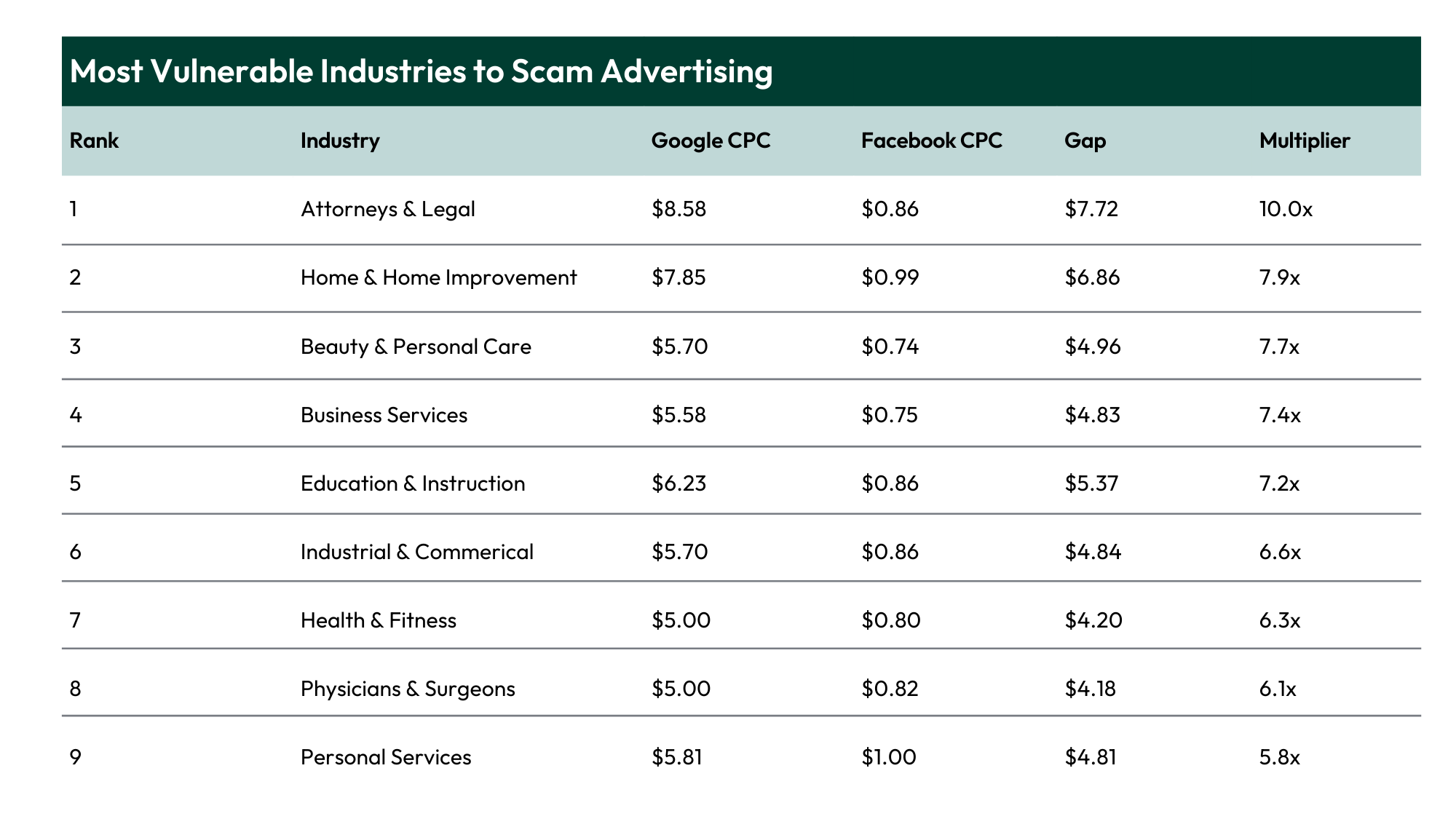
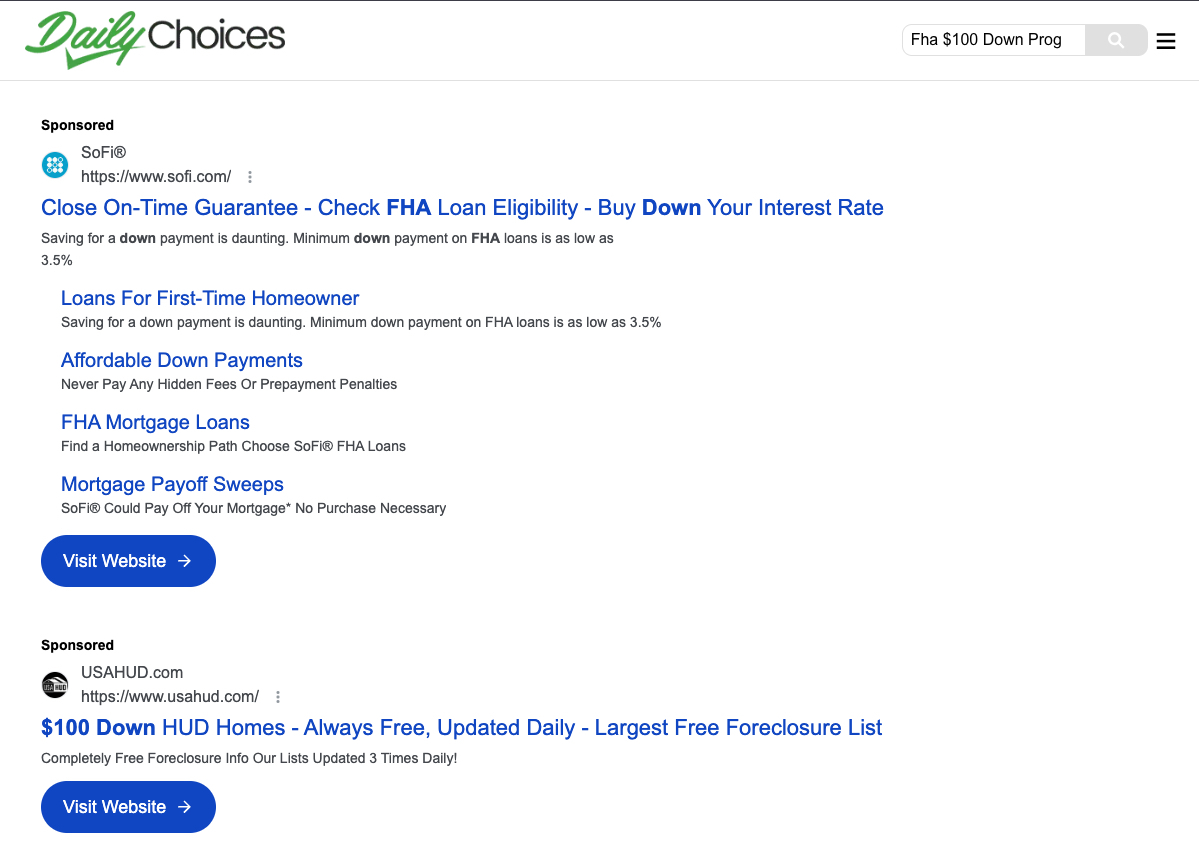
And when we went looking for relevant Facebook scam ads in those industries, it wasn’t hard to find. A simple search in Facebook Ads Library for ‘attorney’ or ‘home loans’ resulted in scam ads that drove to sponsored search results.
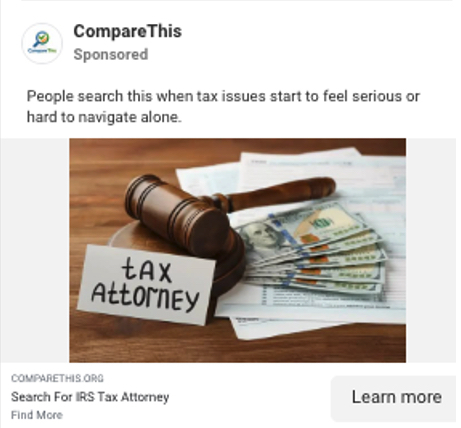
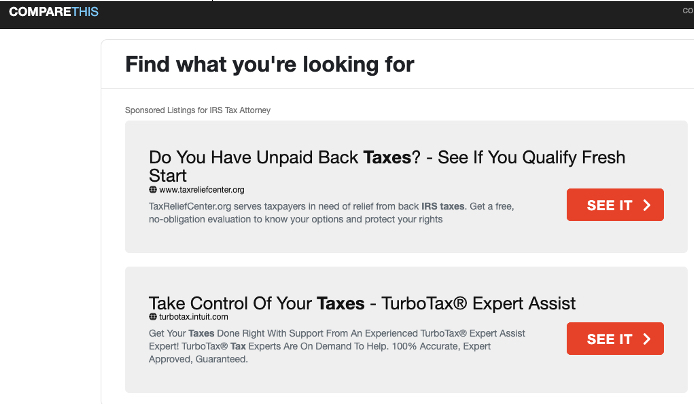
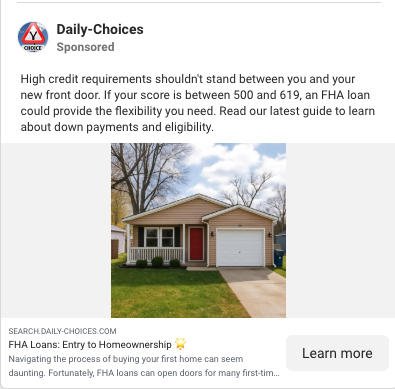
Healthcare consistently ranks among the highest-value targets. A search in Facebook Ads Library for terms like health conditions, medical devices, clinical studies, and even brand names of medications immediately surfaced active scam campaigns funneling to sponsored search results.
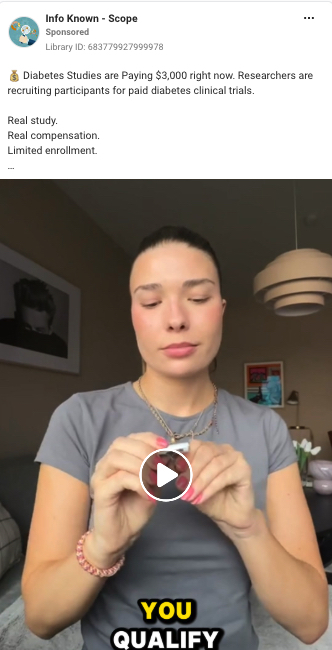
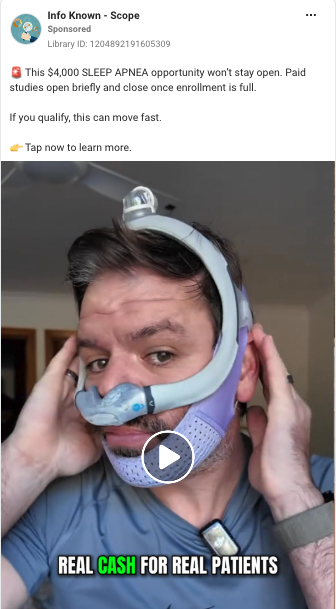
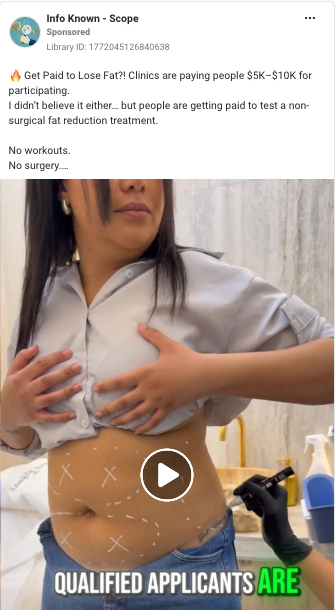
The Real-World Impact: A Client Case Study
Our MedTech client felt the real impact when they reported to us in a panic that they were being barraged with leads reaching out about a paid study. Facebook scam ads were promoting paid clinical trials with $13,000-$23,000 incentives for participating. The ad sent users to a page where our Google ad, among other brands, showed up as a sponsored result due to keyword matches. It led users to believe our client was offering this incentive. Working with our Google and Meta reps, we shut down nearly 1,000 instances of scam ads that could have directly impacted our client.
Now, we’ve seen the scam ads go as far as calling out brand names with AI generated images, that aren’t even medically accurate. These are a trademark violation to these brands.
Our investigations found that many of these parked domains offered few clues about their operators, some shared publishers with no online presence, and several had one interesting thing in common: their domain was registered to the same address that the New York Times reported in 2024 as “a virtual home for perpetrators of identity theft, ransomware, and disinformation campaigns.”
For legitimate healthcare marketers, the consequences are real: inflated costs, wasted ad budgets, and traffic that never had genuine intent to convert.
Our Meta Scam Ads Response Framework
When we identified the threat to our client, our digital advertising team implemented a systematic approach:
- Searched our client’s brand and our top keywords in Facebook Ads Library for scam ads
- Reported the ads in Ads Library as Scam and informed our Meta rep
- Received a domain placement report for where our ads ran on Google Search Partners network > looked up each domain for quality
- Excluded domains in Google Search campaign settings that were poor quality
- Signed up for Brand Rights Protection in Meta Business Manager to report ads at scale, not just for scams but also for any trademark or copyright infringement or impersonation.
The Ongoing Challenge
Platform representatives acknowledge that fake ads on Facebook and Instagram are evolving faster than detection systems can keep pace. While Google and Meta helped us address the immediate crisis, the responsibility for ongoing vigilance falls to advertisers themselves.
Healthcare marketers need to adopt a proactive stance:
- Regularly monitor Facebook Ads Library for your brand terms and high-value keywords
- Review Google Search Partner placement reports for suspicious domains
- Establish relationships with platform representatives who can expedite takedown requests
- Implement Brand Rights Protection tools
- Document patterns you observe and share intelligence with industry peers
The scammers are counting on healthcare brands being too busy to notice. By understanding their methods and implementing systematic monitoring, you can protect both your marketing investment and your brand reputation. We hope these steps help you mitigate any instances you might run into with your own businesses.
Want more strategic insights like this?
Our newsletter explores the strategies, technologies, and approaches that are actually moving the needle for privacy-first brands. No fluff, just actionable insights and real-world lessons from the front lines of performance marketing.